Pochettino’s Checklist for the World Cup: Key Issues the USMNT Needs to Address
Navigating the Road to the World Cup: Key Questions for the US Men’s National Team
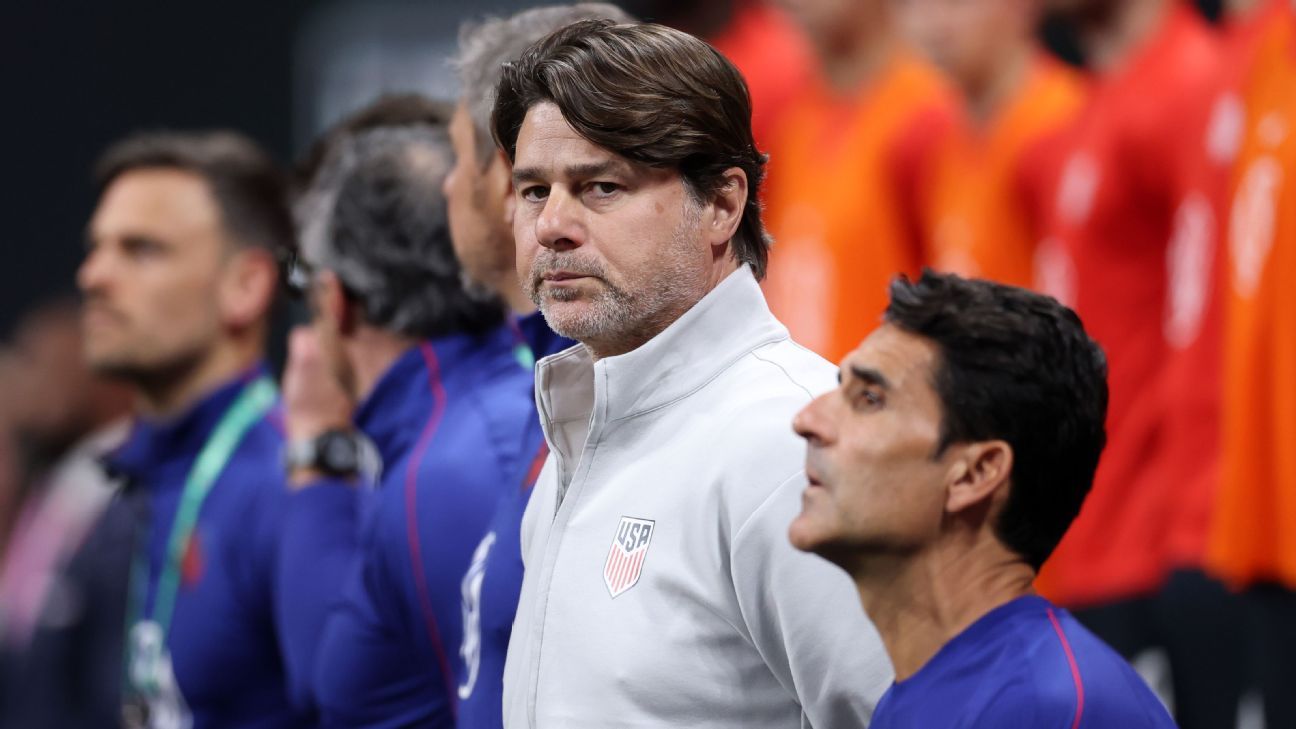
As the clock ticks down to the FIFA World Cup set to commence in mere months, the U.S. Men’s National Team (USMNT) finds itself at a pivotal crossroads. Manager Mauricio Pochettino has much on his plate. With a roster announcement due on May 26, the aim is to finalize selections that bolster the team’s chances for success. However, with the March international window behind us, pressing concerns remain.
Unlocking Pulisic’s Potential
One of the crucial tasks ahead involves revitalizing Christian Pulisic’s performance on the international stage. Pulisic, undeniably one of the top talents in American soccer, has yet to convert his club success at AC Milan into impacts for the USMNT. His last goal for the national team dates back to November 2024, which raises questions about his offensive contributions.
More than just a scoring drought, there’s a tactical aspect to consider. Pochettino experimented with placing Pulisic as a central striker during the recent friendly against Portugal—a role that invited more physical confrontations with defenders. This strategy not only diluted Pulisic’s influence but also sidelined Folarin Balogun, who could be pivotal for the U.S. attack.
Insights from previous matches indicate that Pulisic thrives on the left flank as one of the dual No. 10s Pochettino has sometimes employed. In a September friendly against Japan, he was instrumental as he assisted Balogun and showcased his creativity through numerous successful take-ons. Reverting to that model may not only reignite Pulisic’s form but also elevate the overall attacking synergy of the team.
Solidifying Defensive Partnerships
While offensive strategies are a focal point, the defensive backline is equally critical. Pochettino must determine the optimal pairing for Chris Richards, a likely starter based on his performance. The uncertainty surrounding Tim Ream, who has struggled lately in form, adds complexity to this decision. Options such as Mark McKenzie, Auston Trusty, and Tristan Blackmon possess varying degrees of form and fitness, making the selection process anything but straightforward.
The recent shift to a back-five system during the Japan match paid dividends by minimizing the defensive responsibilities shouldered by Ream. However, Pochettino has adapted between four and five-man defenses, a fluidity that will require careful thought about each player’s strengths and weaknesses. Antonee Robinson, while a dynamic outside back, sometimes leaves the U.S. vulnerable due to his penchant for forward movement. This balance between risk and stability will dictate the team’s tactical approach and ultimately its chances at the World Cup.
Evaluating Midfield Partnerships
The midfield has been another area of concern, particularly the potential pairing with Tyler Adams, assuming he returns to optimal form after battling injuries. Weston McKennie’s versatility allows him to adapt to various roles, but his best performances often align with a more advanced position. Pochettino’s challenge is determining whether to keep McKennie closer to goal or alongside Adams in a more defensive capacity.
The emergence of Malik Tillman adds to the equation; if given a chance, he could further push McKennie down the pitch. Options like Tanner Tessmann and Johnny Cardoso also beckon discussion for the second midfield spot. With a focus on both defending and creating chances, the fit between Adams and his partner will play a paramount role in determining how the U.S. transitions from defense to attack.
The Dilemma of Bubble Players
As the final roster nears composition, Pochettino faces difficult choices concerning the selection of fringe players. The competition for spots, especially among attacking midfielders, has reached a frenzied atmosphere. Gio Reyna, Alejandro Zendejas, and Diego Luna represent different styles of play, each vying for a limited number of positions. Here, the manager must weigh the potential impact of each player against their current form and match fitness.
Reyna’s lack of game time at Borussia Mönchengladbach casts doubt on whether he can be relied upon as a game-changing option. If he’s unable to prove his fitness, Pochettino might lean towards Zendejas or Luna, depending on their recent performances and the tactical flexibility they offer. Balancing potential and reliability will be crucial if the U.S. aims for a memorable tournament run.
As Pochettino navigates this labyrinth of tactical decisions and personnel puzzles, the foundation he lays in these coming weeks will likely dictate the success of the USMNT at this year’s World Cup. The upcoming months are bound to be intense, but they also offer a golden opportunity for growth and evolution.