FIFA President Infantino Will Not Face IOC Consequences for Trump Peace Board Involvement
The Crossroads of Sports and Politics: Gianni Infantino’s Controversial Alignment with Political Interests
In a significant turn of events regarding the intersection of sports and politics, the International Olympic Committee (IOC) has decided not to take action against FIFA President Gianni Infantino following his recent alignment with U.S. President Donald Trump’s Board of Peace. This move raises critical questions about political neutrality in international sports, the implications for FIFA’s development investments, and the broader landscape of global sports governance.
The Context of FIFA’s Involvement
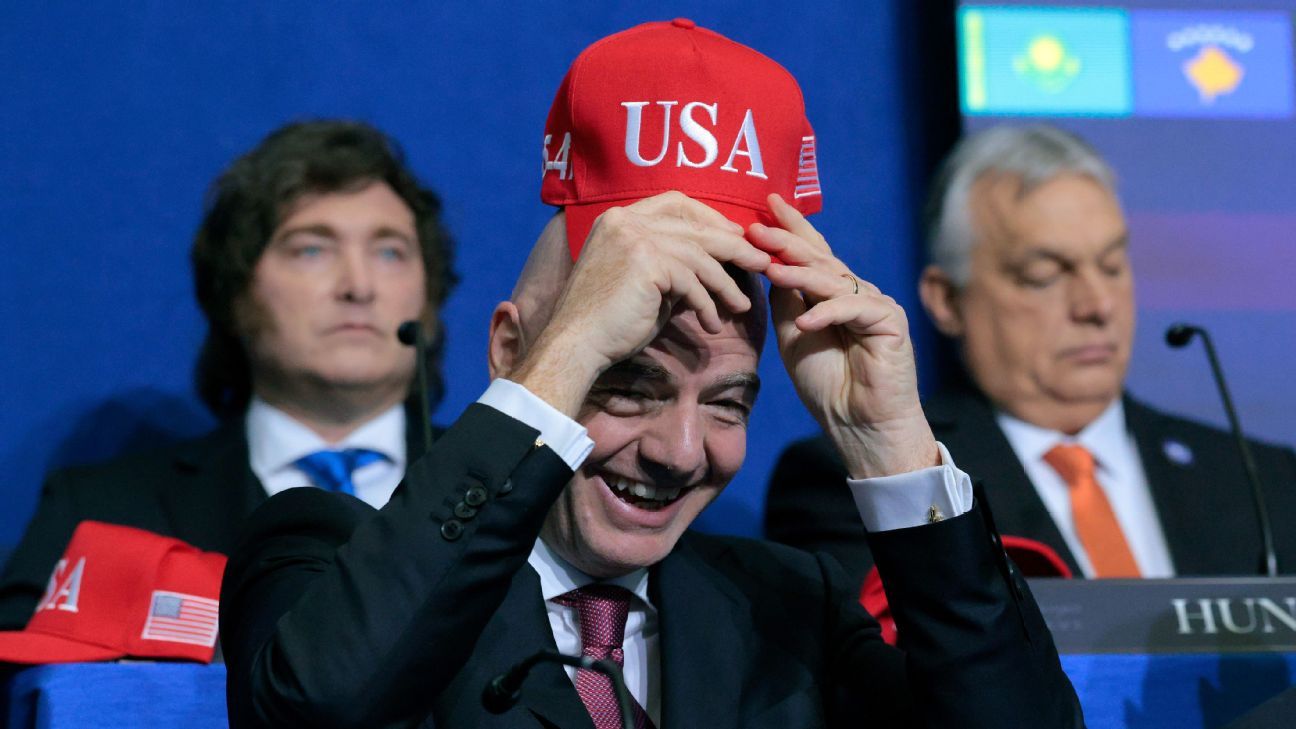
At the heart of the controversy is FIFA’s decision to participate in an agreement that could channel substantial funding—up to $75 million—into Gaza. Infantino, during a recent event hosted by Trump in Washington, D.C., signed this agreement, asserting FIFA’s commitment to fostering sports development in a region often plagued by conflict and instability. For many, this move represents a bold step towards utilizing the unifying power of sports as a tool for peace and economic upliftment. However, the implications of intertwining sporting bodies with political figures, especially ones as polarizing as Trump, cannot be overlooked.
FIFA’s intention to invest in Gaza aligns with its mission to develop soccer worldwide, especially in regions where it can have a transformative impact. Yet, critics argue that such affiliations risk compromising the integrity and perceived neutrality of sports organizations, which are traditionally expected to operate outside the realm of political partisanship.
Assessing Political Neutrality in International Sports
The IOC has established guidelines that call for political neutrality among its members, an oath that binds leaders like Kirsty Coventry, IOC President, and Infantino, along with the organization’s other members. Coventry’s initial statement suggesting an investigation into Infantino’s actions echoed the sentiments of many within the sports community who believe political interests should not taint athletic federations.
However, in a recent announcement, the IOC closed the investigation, asserting that FIFA’s initiatives in Gaza are “entirely in keeping” with the roles of international sports organizations. This abrupt decision leaves many wondering: What constitutes acceptable political engagement for leaders in the sports world? Is investment in troubled regions considered an act of political support, or could it be viewed as part of a humanitarian mission that transcends politics?
The fine line between sports and national interests becomes increasingly blurred under these circumstances, raising questions about where the ethical boundaries lie.
Infantino’s Position and the Global Reaction
Infantino, who is among the 107 members of the IOC, stands at a pivotal juncture in his presidency. His involvement with Trump’s Board of Peace has sparked a wave of reactions across the global sports stage—ranging from outright praise to vehement disapproval. Supporters argue that he is using FIFA’s vast resources wisely, focusing on development in regions where sports can provide hope and community cohesion. Detractors, however, see his actions as a direct alignment with a contentious political regime, potentially jeopardizing FIFA’s standing as a neutral body.
Critics have voiced concerns that such political ties may alienate fans and players, particularly in cultures or regions where Trump’s policies have been viewed negatively. The backlash from activists within Gaza itself has further complicated the narrative, as some view foreign investment as a mere band-aid onto deeper systemic issues within their communities.
Looking Ahead: The Future of Sports Governance
As Infantino’s tenure progresses, and with the IOC’s upcoming general assembly in Milan, the landscape of sports governance faces pivotal shifts. With the addition of new athlete members at this assembly, the voices of those directly impacted by policies are increasingly rising, suggesting that accountability and ethical governance in sports are more crucial than ever.
Discussion surrounding the role of sports organizations in political discourse will likely become more heated. As the Olympics and FIFA navigate this tricky terrain, the potential for collaboration with political entities must be scrutinized to ensure that the foundational ideals of sport—unity, trust, and impartiality—are preserved.
As we look to the future, the ongoing debate of political neutrality in sports organizations will challenge leaders like Infantino and Coventry to redefine the parameters of engagement with political figures while staying true to the core missions of their organizations. This balancing act will shape not only the reputations of these bodies but also their impact on global society.
Related Posts
Pochettino’s Checklist for the World Cup: Key Issues the USMNT Needs to Address
The appeal of the World Cup led to numerous player transfers for African teams during the international break.