USMNT’s Victory Against Uruguay Demonstrates Significant Progress in Just 16 Months
The U.S. Men’s National Team’s Remarkable Transformation Under Pochettino
Over the course of just sixteen months, the U.S. Men’s National Team (USMNT) has undergone a remarkable transformation that has both captivated fans and turned heads in the world of soccer. Following a painful group-stage exit from the 2024 Copa America, where they suffered a humiliating 1-0 defeat to Uruguay, the team has emerged stronger and more unified under the guidance of newly appointed head coach Mauricio Pochettino. This article explores the factors contributing to this revival, the implications for the players, and the leadership philosophy steering the program toward greater heights.
From Rock Bottom to Resurgence
The fall of the USMNT in 2024 was nothing short of tragic. With high hopes following years of investment in player development and infrastructure, fans saw their team crumble under pressure against Uruguay, a performance that ultimately cost then-coach Gregg Berhalter his job. The lack of composure and poor tactical execution were evident during the match, leading to widespread criticism and doubt regarding the team’s future.
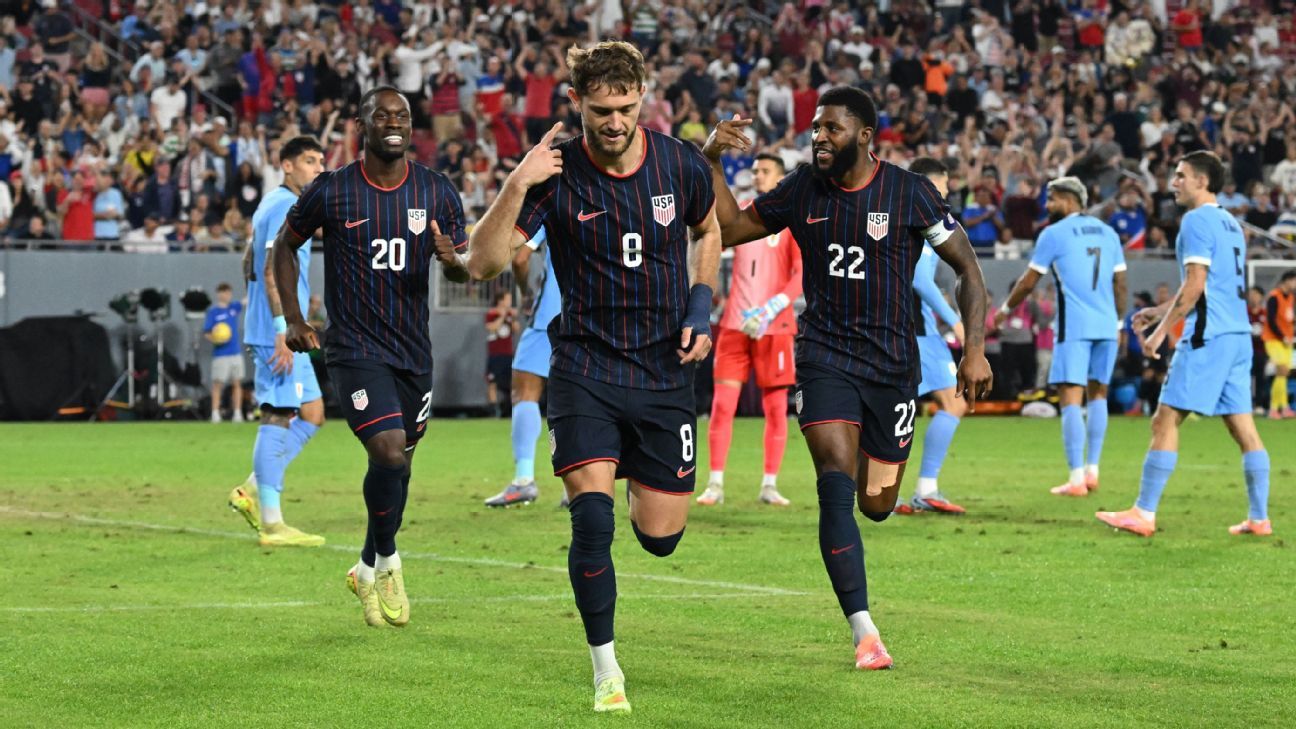
Fast forward to their recent encounter with the same opponent, and the narrative has dramatically shifted. On a rainy Tuesday night, the U.S. delivered a stunning 5-1 victory against Uruguay, scoring four goals in the first half alone. This resounding win not only avenged the previous year’s loss but also solidified their position as a serious contender on the international stage. Such a decisive turnaround speaks volumes about the resilience and determination of the squad, woven together by Pochettino’s vision of what U.S. soccer can achieve.
The Influence of Pochettino’s Leadership
One of the critical factors behind the USMNT’s transformation under Pochettino is his pragmatic and assertive management style. Known for his ability to cultivate talent and his emphasis on tactical awareness, the former Tottenham manager has fostered a culture where competition and meritocracy thrive. Players feel a renewed sense of responsibility to perform, knowing that every training session and match could be an opportunity to secure their roster spot ahead of the World Cup.
During his recent press conferences, Pochettino has continuously challenged his players to think beyond their limitations. He encourages them to “be realistic and do the impossible,” a mantra that has begun to permeate the squad’s mentality. Despite missing key players due to injury—as was the case in the match against Uruguay—his squad stepped up to showcase remarkable chemistry, cohesion, and resilience, all of which contribute to a winning culture.
Fresh Faces and Rising Talent
An often underappreciated aspect of this resurgence is the infusion of young talent into the USMNT. Players like Sebastian Berhalter, Alex Freeman, and Diego Luna, who earned their first international accolades in the wake of strong performances, embody a new generation of U.S. soccer players eager to make their mark. The average number of caps among players who took the field in the victory against Uruguay was a mere 14—indicative of the burgeoning potential within the team.
This blend of youthful exuberance and seasoned leadership—alongside the experience of veterans—presents a compelling dynamic. Even amidst injury woes faced by high-profile players like Christian Pulisic and Timothy Weah, the team exhibited a depth that speaks to the overarching system of development in U.S. soccer. The combination of new blood with existing talent has reinforced a competitive spirit that drives every player to elevate their game.
Significance for the Road Ahead
The implications of this revitalized USMNT extend far beyond the scoreline. Each match represents a crucial opportunity for players to assert their worth as they vie for spots on the roster for the upcoming World Cup. With the tournament set to commence at SoFi Stadium on June 12, every performance in the interim becomes a defining moment in individual careers, creating an environment rich in competition and camaraderie.
Mark McKenzie, who captained the national side during this transformative period, has aptly articulated this shared goal: every player is pushing forward collectively, creating an atmosphere where personal aspiration aligns with the team’s success. This belief that no one is guaranteed a position promotes an effective work ethic that ultimately strengthens the squad.
In conclusion, the turnaround of the U.S. Men’s National Team, once seen as a laughing stock, has become a testament to determination, effective management, and burgeoning talent. As they look ahead, the future feels promising, filled with possibilities for a program ready to leave a mark on the global stage. The next challenge lies in maintaining this momentum as the players continue to strive for excellence, both on and off the field.