Gennaro Gattuso: I’ll leave Italy if we miss out on another World Cup opportunity.
Gennaro Gattuso: A Journey of Redemption for Italy’s Azzurri
The Weight of Expectations
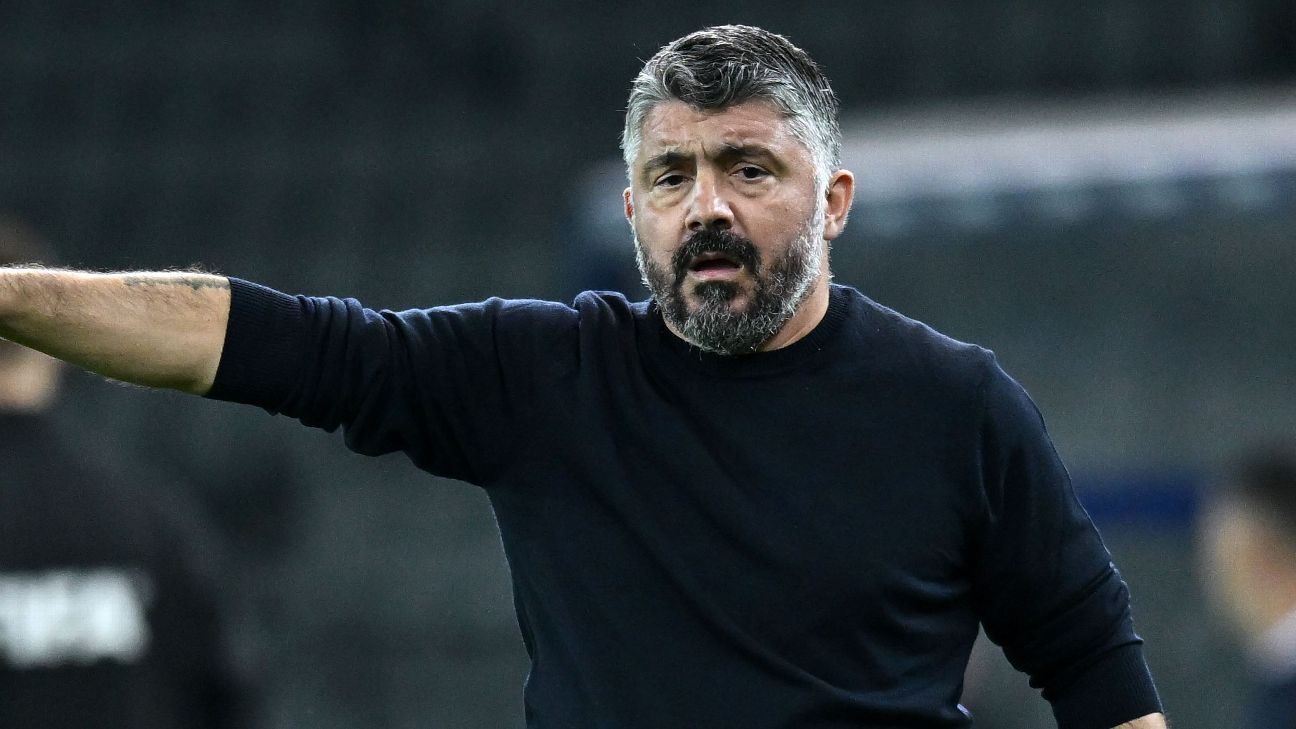
Gennaro Gattuso, a formidable figure in Italian football and a 2006 World Cup winner, took the reins of the Italian national team in June 2025. His appointment came during a turbulent period for the Azzurri, who faced the grim prospect of missing out on the World Cup for the third consecutive time. The stakes couldn’t be higher, as the nation that once dominated world football was in desperate need of rejuvenation.
In a candid moment, Gattuso expressed the seriousness of his role, hinting at living in exile should he fail to guide Italy into the 2026 World Cup. “I’ll take credit if I manage to achieve the goal, otherwise I’ll go and live far away from Italy,” he confessed, revealing a commitment that goes beyond mere coaching — it taps into the national identity and pride of a footballing legacy that has faltered in recent years.
A Revival in Form
Under Gattuso’s stewardship, the Azzurri have experienced a resurgence that has rekindled hope among fans. Their recent 3-0 victory over Israel marked the fourth consecutive win, a vital step toward securing a place in the World Cup qualification playoffs. The turnaround is palpable; Gattuso’s tactics and enthusiastic approach have not only improved the team’s performance but also their morale.
The road to the World Cup, held across the United States, Mexico, and Canada, has been fraught with challenges. Italy is currently three points behind Group I leaders Norway, setting up crucial matches against Moldova and Norway in the coming weeks. These encounters could ultimately decide Italy’s fate and whether Gattuso’s bold declarations about exile remain hypothetical or become a stark reality.
Leadership Challenges
Coaching a national team is an entirely different beast compared to club management. Gattuso contends not only with the tactical requirements but also the emotional weight of a storied footballing nation. “I didn’t think I’d lead the team to 16 goals, but the credit goes to the players,” he said, generously deflecting praise away from himself. This humility is a hallmark of his leadership style and resonates with players who may still be processing the pressure of past failures.
Despite feeling the heat of the situation, Gattuso emphasizes the honor of leading Italy. The national team is a symbol of unity and pride, and the responsibility he bears is profound. He recognizes the importance of a collective effort, stating, “We work so hard and sleep so little, but we do this, too, because when the victories come, it feels very good.” This understanding of shared struggles is crucial for fostering a resilient team culture.
The Tactical Philosophy
Gattuso’s tactical philosophy has centered around resilience and an attacking mindset. His approach embraces a blend of disciplined defending and dynamic forward play, allowing Italy to return to their roots while integrating modern strategies. The immediate results have been encouraging, but the need for consistency looms large. Each step forward must build upon the last, and Gattuso’s tactical acumen will be tested in the pivotal matches ahead.
His methods reflect a deeper appreciation not just for winning matches, but for cultivating a team that plays for each other and the fans. The victories under his belt have proven that when players share a common goal fueled by collective effort, success becomes far more achievable.
The Broader Picture of Italian Football
Italy’s footballing landscape is at a crossroads. The national team’s resurgence symbolizes a broader desire for revitalization within Italian football. After a disappointing era characterized by missed opportunities and lackluster performances, Gattuso’s presence offers a glimmer of hope not just for the national team but for the entire footballing community in Italy.
As the Azzurri treasure the rare feeling of winning, the implications stretch beyond the pitch. Performances in international competitions are crucial for boosting grassroots interest in the sport, potentially helping to uplift Italian club football as well. If Italy can secure a spot in the World Cup, it would inject a much-needed dose of optimism and pride back into a footballing culture yearning for resurgence.
Gattuso’s journey is not only a narrative of personal redemption but also a reflection of Italy’s rich footballing heritage that persists in seeking glory on the biggest stages. The fervor, anticipation, and pressure surrounding the Azzurri extend well beyond Gattuso’s coaching prowess; they encompass a national spirit poised for revival.