Why Salah and Slot Shouldn’t Be Held Responsible for Liverpool’s Difficulties This Season
The Current Predicament of Liverpool FC: A Deep Dive into Team Dynamics and Tactical Challenges
Liverpool FC, a club steeped in history and recent successes, finds itself navigating turbulent waters in the early months of the 2025-26 season. Key figures within the club, including star player Mohamed Salah and head coach Arne Slot, find themselves embroiled in a mix of expectation, confusion, and criticism. As Liverpool’s ambitions collide with the harsh realities of form and strategy, we delve deeper into the intricacies shaping this storied team’s current situation.
A Star Under Pressure: Mohamed Salah’s Struggles
Recent comments from Mohamed Salah reveal a player feeling the weight of expectations pressing down upon him. In a candid postgame interview, Salah expressed his discontent over being perceived as the scapegoat for Liverpool’s faltering title defense. Critics have indeed pointed fingers at him, linking his performance to the decline in Liverpool’s chances for back-to-back Premier League titles, reminding fans that he played a pivotal role in their previous successes.
However, the issue seems to transcend individual performance. Salah’s output has dipped, sitting below his impressive historical averages. For context, he has historically averaged around 0.75 expected goals and assists per 90 minutes. As of this season, he has yet to find the rhythm that saw him celebrated as one of the world’s best attackers. The question lingers: Is Salah’s decline a symptom of deeper issues within the squad, or is he struggling to find his footing within the titular pressure of expectations alone?
The nature of modern football often sees talent constrained by a collective system. Salah’s frustrations may stem from factors such as lineup inconsistency and tactical disarray introduced by Slot, demanding immediate answers in a sport where cohesion is paramount.
Arne Slot: Riding on the Coattails of History
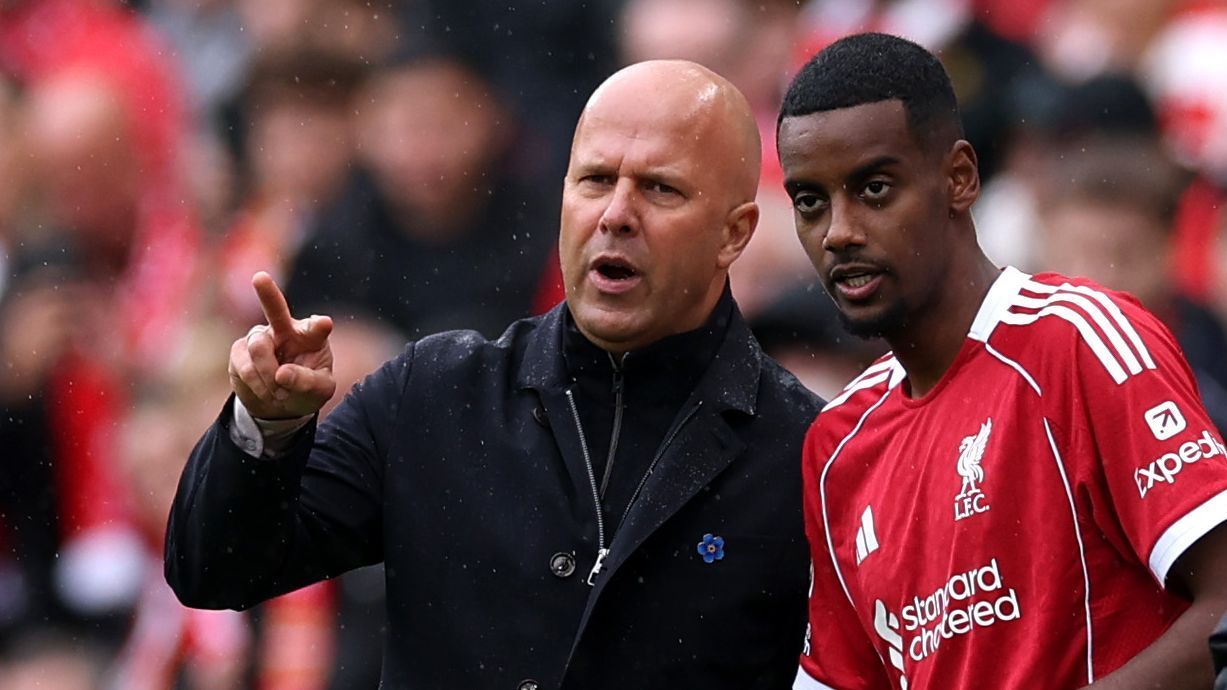
Arne Slot stepped into the imposing shoes of Jurgen Klopp, inheriting not just a team, but the legacy of Klopp’s era at Liverpool. Despite helping the team clinch the Premier League title in his first season, skepticism abounds regarding Slot’s tactical acumen and long-term viability. While Klopp’s influence elevated Liverpool into a formidable powerhouse, Slot’s initial success has led to questions about whether he is capable of steering the club through the challenges of a new era.
Under Slot’s management, the team was bolstered by significant investment in the transfer market, acquiring six new players at a staggering British-record fee, yet the results have been less than encouraging. The fluidity and synergy that propelled Liverpool to the title seem lost amidst a rapidly rotating lineup and tactical experiments. It’s troubling for Slot that while his predecessor thrived on continuity and a clear footballing philosophy, his approach appears erratic amidst mounting pressure.
The intertwining narratives surrounding Slot and Salah highlight an underlying challenge faced by the club—a disconnection between leadership and execution on the pitch. Without the bedrock of tactical identity established under Klopp, Liverpool risks becoming a series of isolated performances rather than a cohesive unit.
The Investment Paradox: New Arrivals Amidst Old Struggles
The summer transfer window brought monumental signings, with the anticipation that new arrivals such as Florian Wirtz and Alexander Isak would reinvigorate the squad. However, the startling reality is that despite their glittering reputations, these players have yet to deliver the expected impact. Wirtz’s zero-goal tally and Isak’s underwhelming contributions have left fans scratching their heads at the glaring disparity between investment and output.
Liverpool’s historical success has often stemmed from astute picks in the transfer market—players who not only possess intrinsic talent but also seamlessly integrate into a larger team dynamic. The current predicament accentuates the club’s overconfidence in their acquisitions; the failure to simultaneously integrate numerous new stars has led to tactical ambiguity and inconsistent performances.
As the team struggles to develop a cohesive playing style, the need for creativity and accountability becomes imperative. While Wirtz and Isak possess the profiles of top players, their lack of impact contributes to an atmosphere of uncertainty. This scenario leads one to ponder: are clubs simply arming themselves with potential but failing to align that with strategic foresight?
The Broader Implications: Tactical Identity and Player Cohesion
Football is often described as a beautiful game built on intricate relationships—tactical identities shape how teams fluidly transition between attack and defense. Liverpool’s historical success can be attributed to their players’ understanding of roles and responsibilities across the pitch. In a season marked by inconsistency, Slot’s managerial strategy necessitates a reevaluation of tactical frameworks and player synergy.
It becomes evident that Slot’s approach needs to transition from reactive to proactive. The fluid interplay between players that characterized Klopp’s era has succumbed to hesitation and indecision this season, showcasing a disturbing lack of fluidity. As the clock ticks towards the festive fixtures, Slot must urgently foster cohesion among his players to rediscover the rhythms that defined Liverpool’s recent history.
Amidst the noise surrounding the club, it’s crucial to separate individual performances from the collective responsibility of the team. Both players and management must share accountability for the failures endured thus far. While Slot is making significant changes, the process must be met with understanding—transition phases rarely yield immediate gratification. Yet, the opportunity remains for Liverpool to navigate these troubling waters, evolving into a side that can marry both individual brilliance and team effectiveness moving forward.
With the stakes escalating, the journey to find balance will require Liverpool to harness the resilience that made them a formidable side just a season ago. The true test lies in whether this storied club can reclaim its identity while adapting to modern football’s evolving demands.