
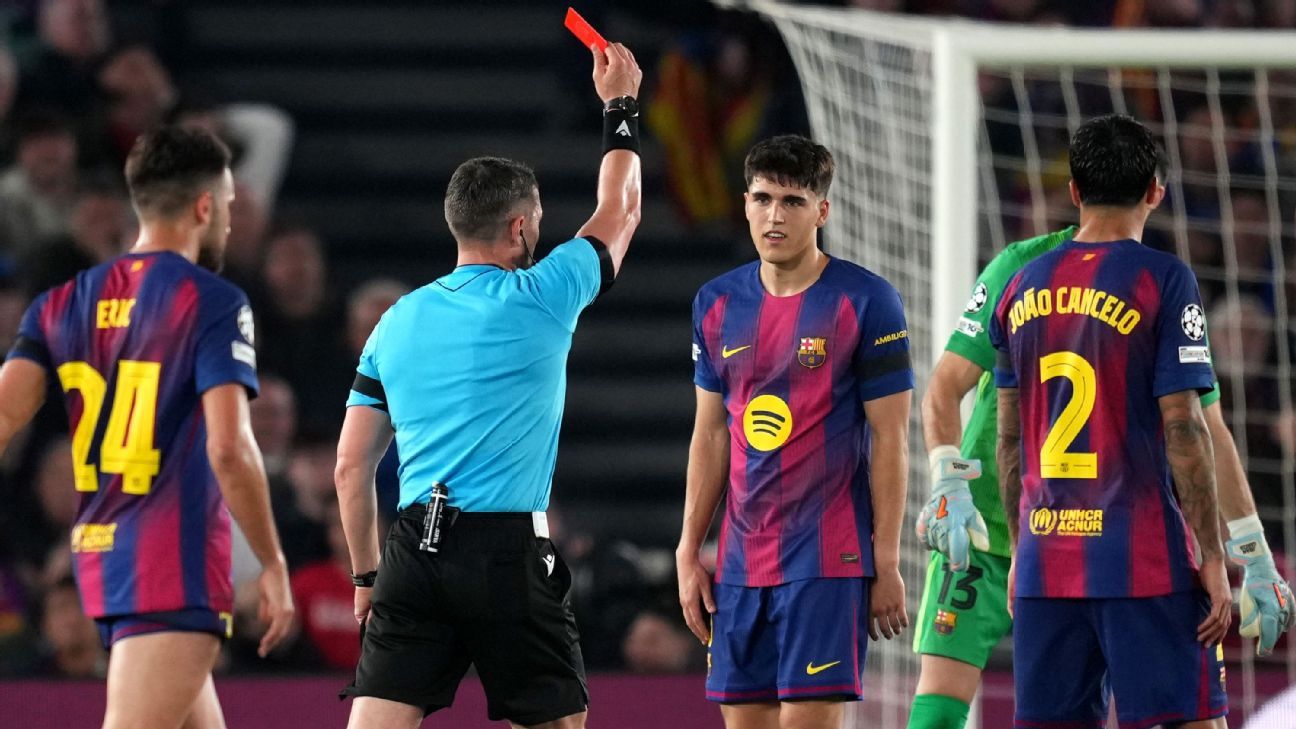
VAR Analysis: Cubarsi’s Red Card Altered Barça vs. Atléti Match. Was There a Penalty for Pubill?
The VAR Debate: Navigating the Controversies of Video Assistant Referees in Football
In the world of football, the implementation of the Video Assistant Referee (VAR) system has stirred debate, creating a tempest of opinion every week across major competitions like the Premier League, the UEFA Champions League, and the FA Cup. What underpins these discussions isn’t just the controversy itself, but the intricate and sometimes opaque processes that guide these pivotal decisions. The incidents from recent matches invite us to unravel how these decisions are made and their implications on the game.
Understanding the VAR Protocol: Behind the Screens
VAR is designed to assist match officials in correcting clear errors related to specific game-changing scenarios. These include goals, penalty decisions, direct red card incidents, and mistaken identity. The system operates on defined protocols that ensure consistency and fairness, aiming to improve the accuracy of pivotal decisions. Andy Davies, a seasoned referee with a detailed understanding of the practical workings of VAR, highlights the importance of this technology while acknowledging its complexities.
For instance, during a Champions League match between Barcelona and Atlético Madrid, a crucial incident arose involving Pau Cubarsí, who received a red card after a VAR review for denying a clear goal-scoring opportunity. Initially issued a yellow card, referees often base their decisions on their on-field perspective, but the VAR serves as a second pair of eyes, offering different camera angles and a broader context to the situation. In this instance, the VAR recommended a review, leading to Cubarsí’s eventual dismissal—demonstrating how VAR can prompt a reconsideration of a referee’s initial judgment based on thorough assessment.
Case Study: The Cubarsí Incident
The game turned dramatically in the 44th minute when Cubarsí was penalized. Atlético’s Giuliano Simeone seemed poised to score when Cubarsí’s challenge led to a clear VAR review. Here lies the essence of the VAR protocol: it’s not merely about finding fault but about ensuring fairness in outcomes. In this scenario, despite the referee’s initial inclination to issue a yellow card, the multitude of replays depicted an undeniable opportunity had been obstructed, thus justifying the red card.
Davies emphasizes that while the initial decision may seem harsh in hindsight, the VAR’s role is not punitive but corrective—it seeks to realign the referee’s call with the reality of the incident. The aftermath unveiled how quickly a match can pivot, with Atlético securing a vital victory following the sending off. Such turning points underscore the tangible impact of VAR on competitive integrity.
A Controversial Handball Decision: Navigating Gray Areas
Not all VAR interventions, however, yield universally accepted outcomes. A perplexing incident arose during the same match involving a potential handball by Atlético’s Marc Pubill, who allegedly stopped a goal kick with his hand. Barcelona vehemently pushed for a penalty, yet the on-field referee opted against it. This moment brought to light the sometimes murky interpretations of the Laws of the Game, particularly surrounding goal kicks and handballs.
Examining this incident through VAR lenses provides insight into the referee’s decision-making process. Under Law 16, the goal kick is in play when sufficiently kicked and displaced, which complicates the understanding of Pubill’s actions. In the eyes of the referee, Pubill’s handling of the ball did not directly affect opposition play, a judgment that often places officials in no-win situations.
Davies points out that inconsistencies in similar scenarios have arisen in the past, notably with differing calls in high-profile matches. Such ambiguity highlights the subjective nature of certain rulings, feeding into the ongoing debate about the efficacy and interpretive challenges of VAR. The reliance on a referee’s assessment in real-time plays a crucial role in shaping these contentious calls; ultimately, their judgment stands as the final word unless a clear error has occurred.
The Broader Impact: Insights from the Football Community
The backdrop of VAR is not merely about correcting decisions—it intertwines with football’s competitive fabric and emotional resonance. Fans, players, and managers each hold a stake in the outcomes, leading to fraught exchanges dissecting the merit of VAR influence. For instance, the uproar following an incident where Aston Villa’s Tyrone Mings was sanctioned for handling the ball compared to Arsenal’s Gabriel avoiding punishment in a similar context speaks volumes about perceived fairness in officiating.
Each incident analyzed through the lens of VAR reflects a microcosm of broader football discourse. As debates unfold in the terraces and online forums, the anticipation of VAR’s intervention has become ingrained in how matches are experienced. The fluidity of the game collides with the rigidity of rules, forging a landscape where technology and traditional officiating harmonize, albeit imperfectly.
As we explore the evolving role of VAR within football, it is clear that its influence reverberates beyond the field—it reshapes narratives, recalibrates fan expectations, and invites continuous dialogue about the nature of fairness in one of the most beloved sports globally. The intersection of technology and human judgment in football remains a continuum, where each decision fosters deeper engagement with the game’s complexities.
Related Posts

Stay or go? Slot’s future with Liverpool takes center stage in UCL discussions.

From Manchester United Struggles and England Criticism to a Fresh Contract: Why Harry Maguire Feels Restored