
VAR Analysis: Arsenal’s Penalty Decision and Manchester United’s Lucky Escape
Understanding the Controversies Behind VAR in the Premier League
Video Assistant Referee (VAR) has undoubtedly stirred debate in the world of football, drawing scrutiny week after week in the Premier League. This technology, designed to eliminate clear and obvious errors, frequently faces backlash from fans, players, and pundits alike. But how are decisions made? What constitutes a correct or incorrect ruling? This article aims to demystify VAR’s decision-making process while analyzing recent high-profile incidents.
The VAR Decision-Making Process
At its core, VAR is intended to assist referees in making critical decisions regarding goals, penalty kicks, direct red cards, and mistaken identity incidents. The technology allows for multiple camera angles, instant replay, and careful examination of the Laws of the Game. However, while the idea is straightforward, the execution often invites a mix of praise and criticism.
Every weekend, major incidents are scrutinized to assess both the VAR protocol and adherence to the Laws of the Game. Those responsible for VAR are trained officials, equipped with expertise and video analysis tools, but they are still subject to interpretation. The focus often gravitates toward whether the VAR has made a factual determination or relied on subjective judgment, leading to discrepancies in opinions and outcomes.
Key Recent Incidents
Arsenal vs. West Ham United: Should the Penalty Have Stood?
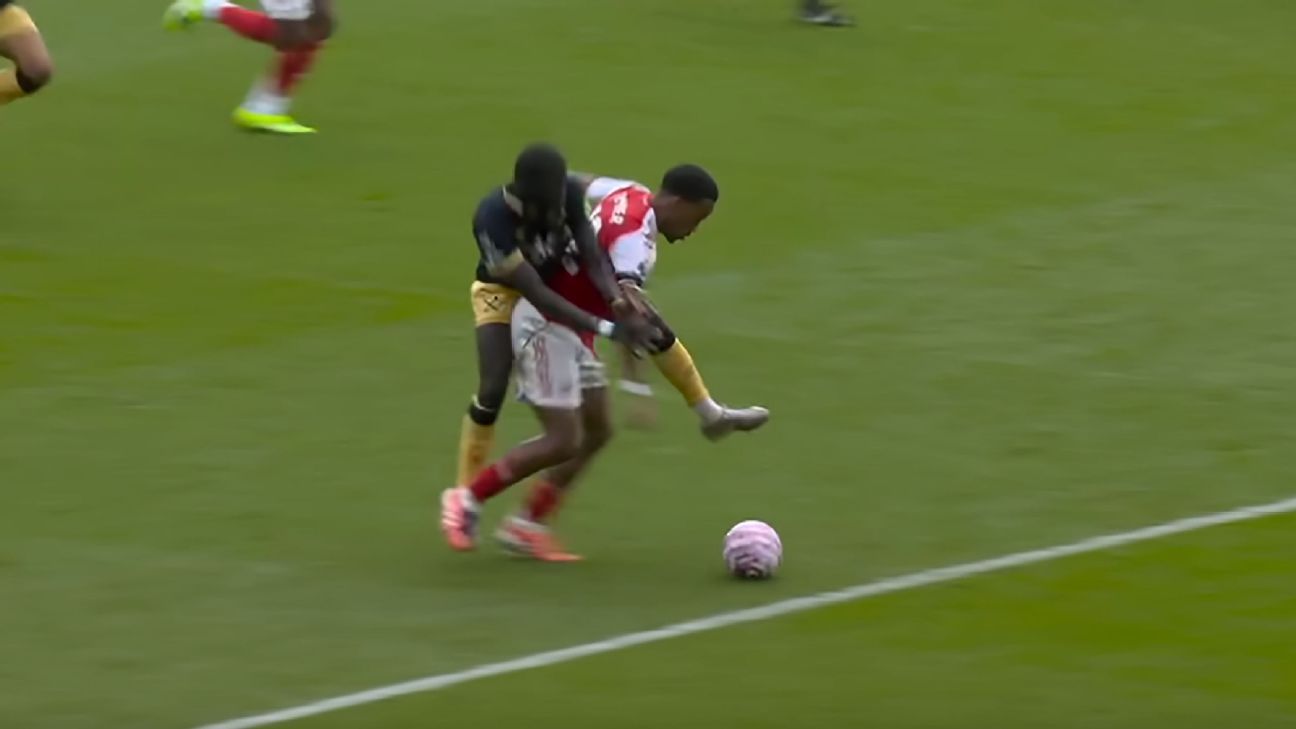
In a tense match between Arsenal and West Ham United, a penalty awarded to Arsenal in the 67th minute became a focal point for discussion. Jurriën Timber was brought down by El Hadji Malick Diouf, sparking questions about the nature and location of the contact that led to the foul. Referee John Brooks pointed to the spot, but a VAR review followed, led by Michael Oliver.
The VAR concluded that the foul occurred just inside the penalty area. The discussion hinged on whether contact initiated outside the area could result in a penalty if the foul itself took place within it. This is critical because several laws can blur the lines regarding location and definition of the offense, resulting in different interpretations across various matches.
While some believe Diouf’s challenge was clear foul play, others argue the contact was trivial and initiated outside the box, raising questions about whether a free kick should have been awarded instead. Ultimately, VAR upheld the referee’s decision, and Bukayo Saka scored, showcasing the subjective nature of VAR reviews that can hinge upon marginal interpretations.
Sunderland’s Spot Kick Overturned Against Manchester United
Another contentious VAR incident took place during Sunderland’s match against Manchester United. A penalty was awarded for a supposed foul by Benjamin Sesko on Trai Hume, but the VAR, Neil Davies, intervened to cancel the decision. The crux of this decision rested on whether contact was made, which VAR determined it was not.
The ruling stirred mixed feelings; while some fans agreed with the overturn due to a lack of contact, others felt it was a clear foul that warranted a penalty. The debate over this incident highlights a broader concern: the inconsistencies in how different VAR officials interpret similar situations, demonstrating the subjective nature of the decision-making process.
The Handball Debate: Arsenal vs. West Ham
In another sequence from the same match, potential handball by West Ham defender Konstantinos Mavropanos came under scrutiny. Amid industrious Arsenal pressure, many believed Mavropanos committed a foul when the ball touched his arm. Here, VAR opted to review the incident but ultimately ruled no penalty would be awarded.
Critics noted that under stricter handball laws prevalent in other leagues, this might have resulted in a spot kick. However, the Premier League’s adjustments account for a player’s natural movements, emphasizing that an accidental touch should not lead to a penalty unless it significantly alters the game.
The Complexity of In-Game Decisions
As the season unfolds, the complexities of VAR only seem to grow. For instance, appeals by players like Liverpool’s Alexander Isak for a penalty after a potential foul went unheeded when the VAR determined Isak had initiated the contact himself by pulling on Reece James’s shirt prior to falling. Decisions like these not only demonstrate VAR’s role in officiating but also the fine line between playacting and genuine fouls.
Moreover, the challenge of distinguishing between a reckless challenge and accidental contact remains an uphill battle for VAR officials. For example, significant debate emerged regarding a high-foot challenge in a match featuring Sunderland, with arguments on both sides surrounding player intent and the resultant impact on the game.
The Bigger Picture
The operations of VAR extend beyond mere judgment calls; they highlight the ongoing evolution of football officiating. As technology becomes more integrated into sports, the constructs of human perception, intervention, and the subjective nature of sport come under scrutiny. Fans often desire clarity and consistency, yet the fluidity of human judgment remains a continually contested topic, underpinning the conversations around VAR.
Through weekly analysis of major incidents, one can see that VAR will continue to ignite debate within the passionate football community. The urge for fairness, transparency, and justice in sports persists, and while VAR aims to address these demands, the interpretations and outcomes will invariably spark robust discussions long into the future.