
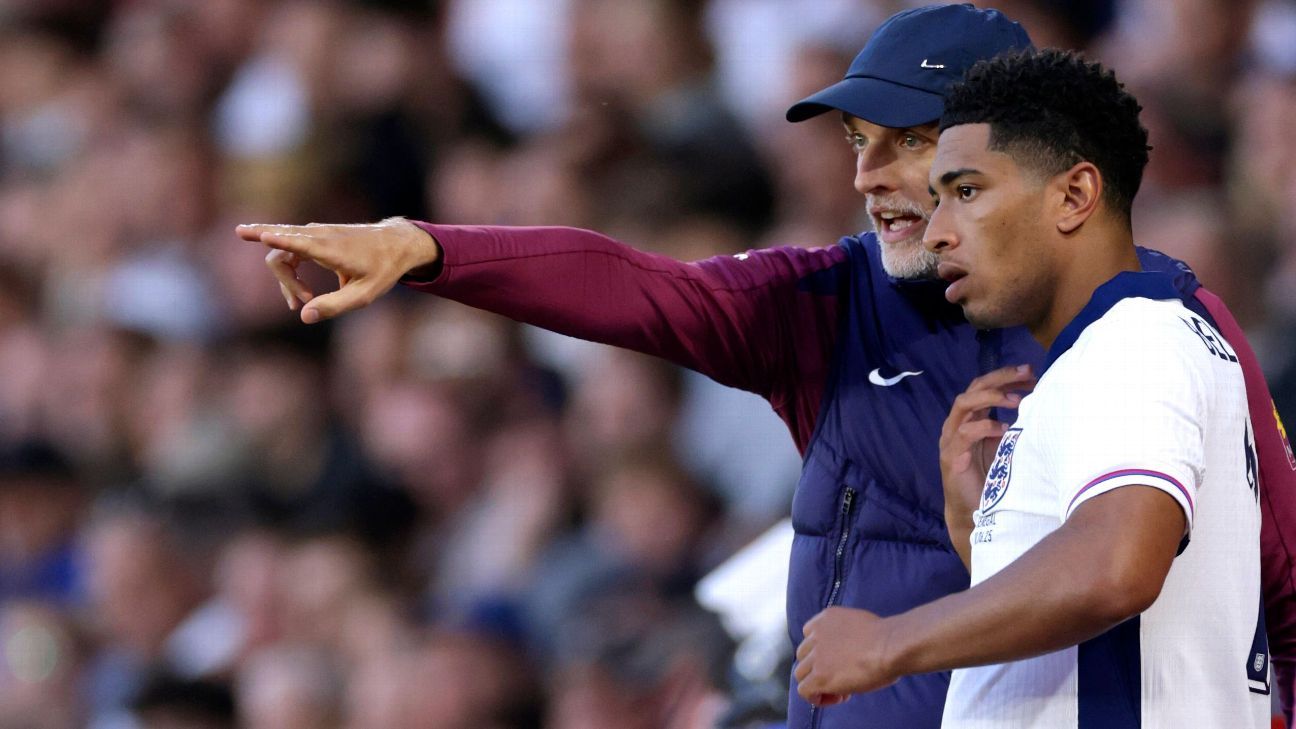
Tuchel’s Position on Bellingham May Benefit England in the World Cup
The Complex Messaging of Thomas Tuchel: Bellingham’s Omission and Squad Dynamics
The Enigmatic Leadership of Thomas Tuchel
Thomas Tuchel’s coaching career has been punctuated by an unyielding approach to team management, blending tactical innovation with a knack for confrontation. His stints at Borussia Dortmund, Paris Saint-Germain, Chelsea, and Bayern Munich have not only showcased his adeptness at elevating clubs but have also left a trail of controversies—most notably, his decision to sideline England’s shining star, Jude Bellingham, for recent international fixtures against Wales and Latvia.
Omitting a player of Bellingham’s caliber, particularly during a time when he’s rising as a pivotal force in world football, is a bold statement. Tuchel’s decision, while reportedly devoid of personal grievances, signals a deeper philosophy concerning team cohesion and player dynamics. It reflects a desire to assert control over the narrative within the squad, emphasizing the importance of collective performance over individual accolades. This is a theme that resonates throughout Tuchel’s career—a blend of support and challenge that aims to push players to new heights.
The Dynamics of Bellingham’s Presence
Jude Bellingham has morphed from a promising talent at Birmingham City to a key player for Real Madrid, boasting impressive statistics that have propelled him into the global spotlight. However, with fame comes scrutiny, and recent reports suggested that his demeanor in training and matches has not always harmonized with the team’s ethos. While his teammates recognize his immense talent—Anthony Gordon notably remarked on how “you notice when he is not there”—there are subtle undercurrents of tension tied to Bellingham’s perceived arrogance or “macho image.”
Bellingham’s tendency to express frustration with teammates during games could be seen as a double-edged sword. On one hand, it’s an indication of his desire for excellence; on the other, it risks creating rifts within a squad that must operate as a cohesive unit. This scenario poses an intriguing question: is it Bellingham’s mindset that needs recalibrating, or is Tuchel employing a teaching moment, challenging him to reconsider how he fosters teamwork?
The Broader Implications for England’s Squad
Tuchel’s choice to exclude Bellingham from critical qualifiers carries weight beyond the immediate tactical concerns. It’s a strategy that seeks to build a more unified squad, one that understands sacrifice and the importance of contributing not just in skill, but in spirit. By prioritizing harmony over talent, Tuchel appears to be keenly aware of historical pitfalls that have plagued successful teams in the past. Stories from the 2010 French squad or the internal discord within Spain illustrate just how quickly talent alone can be undermined by factionalism.
Engendering a ‘team-first’ mentality may also serve to encourage healthy competition among players vying for the same positions. By signaling that no player is invincible, Tuchel effectively levels the playing field for others like Cole Palmer, Morgan Rogers, and Morgan Gibbs-White—players who now feel they have an opportunity to shine. This approach not only strengthens the squad’s depth but also emphasizes individual accountability.
Learning and Growing Within a Competitive Environment
The idea of pushing players like Bellingham—who is still relatively young despite his immense experience—toward greater self-awareness isn’t merely about penalizing perceived shortcomings. It’s about nurturing a mindset that is crucial for world-class athletes. Tuchel’s management style harks back to coaching legends, including Sir Alf Ramsey, who recognized the importance of keeping even the best players on their toes.
Bellingham’s journey reflects a broader narrative that many athletes face in their careers; how to manage success and expectation while remaining relatable and grounded within a team environment. The lessons drawn from this could ultimately contribute to his development not just as a player, but as a leader. By taking note of Tuchel’s methods—whether with a touch of resentment or realization—Bellingham could emerge as a more impactful, well-rounded professional.
Transitioning from solitary star to pivotal team player is a hurdle many in the spotlight fail to overcome, but Tuchel’s unique style offers Bellingham an opportunity that is as educational as it is challenging. The boundaries of individual prowess must intersect with the collective effort if England is to maximize its potential in the upcoming World Cup.
In summary, Tuchel’s layered approach, typified by Bellingham’s omission, is not simply a managerial tactic; it’s a calculated effort to cultivate resilience and camaraderie within a squad that must function harmoniously under the immense pressure of international competition. Whether Bellingham will take this moment as an opportunity for growth remains to be seen, but it’s clear that the path Tuchel is paving for him—and the rest of the team—is one that emphasizes unity, discipline, and an unyielding commitment to collective success.