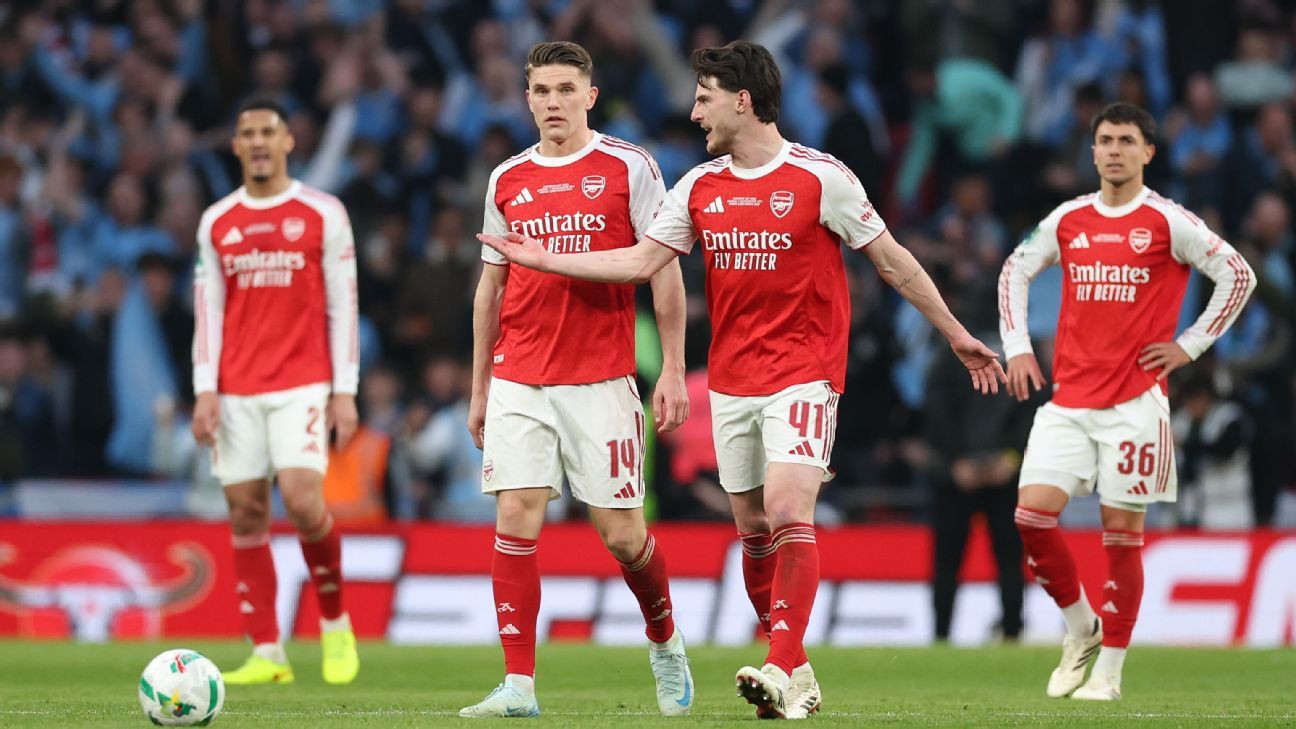

The Top and Bottom Performers in Various Skills in the Premier League
The Premier League’s Performance Lab: Analyzing Players Through Analytics
As we gear up for Year 2 of dissecting the Premier League through a lens of statistics and analytics, it’s fascinating to see how data can yield insights beyond what traditional observation might suggest. This year’s analysis, bolstered by the advanced dataset from Gradient Sports, unveils a myriad of discussions around players who excel, falter, or simply intrigue across various metrics. Let’s delve into some fascinating findings.
Fastest and Slowest Players: A Duality of Speed
Speed is often a defining attribute that can change the game in an instant. At the forefront, Jackson Tchatchoua of Wolverhampton Wanderers has set the pace, literally, with a max speed of 35.78 km/h. Despite the club’s struggles, Tchatchoua’s raw speed stands out, showcasing the potential that even underperformance can’t diminish.
On the flip side, the slowest player in the league, Tom Cairney of Fulham, offers a contrasting picture. With an average speed of just 28.35 km/h, his game is more about strategic possession rather than breakneck pace. This discrepancy highlights that speed isn’t everything in football; players like Cairney can provide invaluable contributions in build-up play, choosing smart passes over rapid movement.
Passing Precision: The Good, the Bad, and the Under Pressure
Passing, the backbone of football, varies widely among players. The standout performer is Bruno Fernandes from Manchester United, whose precision has earned him an impressive passing grade of 98.6. His ability to deliver the ball under pressure frequently elevates his team dynamics, allowing for seamless transitions and offensive plays.
Conversely, Dan Burn of Newcastle United struggles considerably in this realm, possessing the dubious distinction of being the worst passer in the league, with an average of only 46.9 for his passing accuracy. This situation raises questions about player roles and expectations, especially for a defender expected to facilitate ball movement rather than become a liability.
Diving deeper into passing under duress, Rayan Cherki of Manchester City excels, hinting that some players thrive when the stakes are highest, while others may falter when confronted with pressure situations. In contrast, Dan Burn also finds himself at the bottom of this category, raising eyebrows about the importance of adaptability in high-pressure moments.
Goalkeeping Greatness: Reliability Under Fire
Goalkeepers often operate in a world of their own, yet their performance can hinge dramatically on the statistics that gauge their reliability. Gianluigi Donnarumma epitomizes consistency, recently recognized as the league’s most reliable goalkeeper by not committing a single error while facing shots. This steadfast nature is pivotal for a team’s overall morale and strategy – when your goalkeeper exudes confidence, it spreads positively throughout the squad.
In stark contrast stands Bernd Leno of Fulham, whose mistakes lead to a higher number of goals conceded than expected. This inconsistency can be a source of deep frustration for both teammates and fans alike, as a single mistake in goalkeeping can shift the momentum of a match in an instant.
Athleticism and Versatility: A New Breed of Players
Moving beyond conventional statistics, the athletic prowess of players becomes essential in defining their impact on the pitch. Daniel Muñoz claims the title of the most athletic player this season with a striking score of 99.6 out of 100. This blend of speed, endurance, and agility not only enhances his game but also illustrates the demanding standards modern players must meet to compete effectively.
However, contrastingly, André of Wolverhampton exhibits a shocking athleticism rating of just 0.7. Such stark disparities can significantly alter a team’s dynamics, emphasizing the importance of physical capability alongside technical skill. As football progresses, clubs may increasingly value players like Muñoz, who can change the game with sheer athleticism.
As the Premier League season unfolds, these insights into player performances, grounded in robust data and analytics, enrich our understanding of the game. Riding on the convergence of traditional scouting and modern analytical techniques, football is entering an era where numbers illuminate the intricacies of player contributions, offering fans and analysts alike a deeper appreciation of the beautiful game.
Related Posts

Stay or go? Slot’s future with Liverpool takes center stage in UCL discussions.

From Manchester United Struggles and England Criticism to a Fresh Contract: Why Harry Maguire Feels Restored