Salah’s Liverpool outcry resonates with Ronaldo’s departure from Man Utd
Mohamed Salah: A Star in the Spotlight for All the Wrong Reasons
The Increasing Temperature at Liverpool
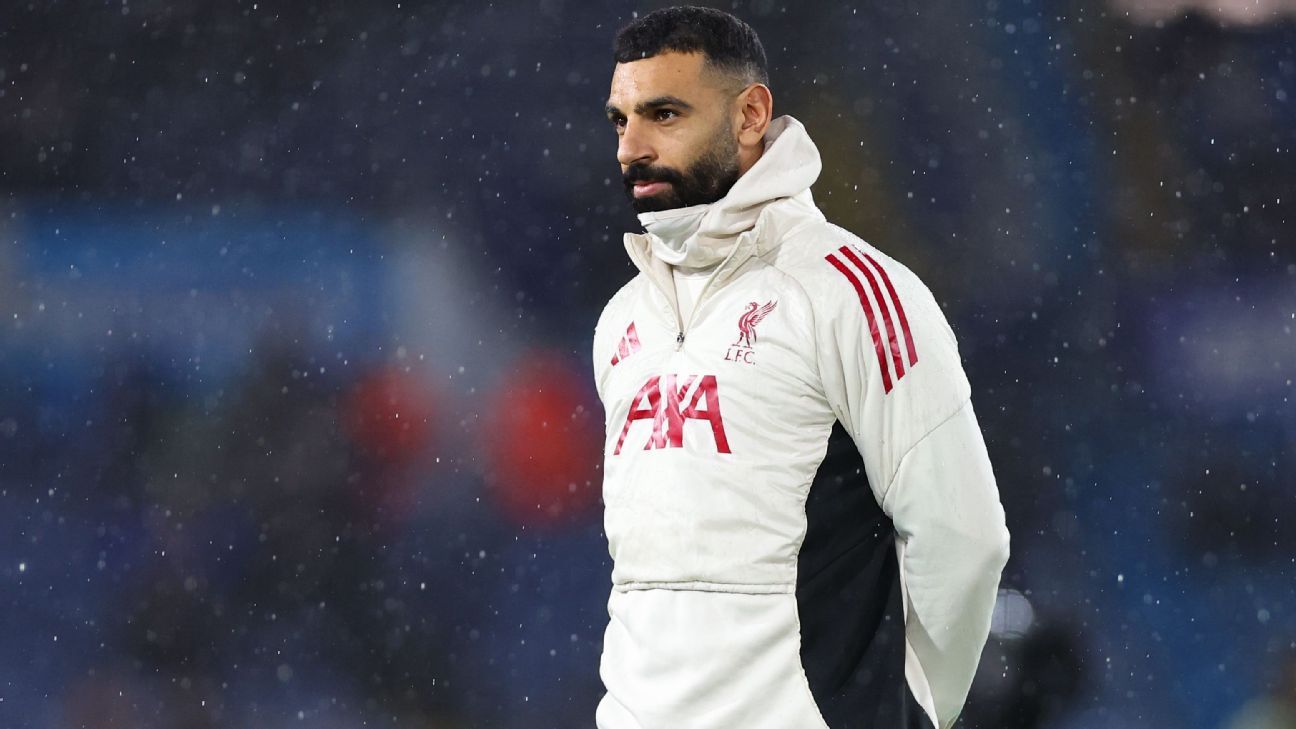
In a season marked by inconsistency and pressure, Mohamed Salah has emerged as a central figure—not for his on-field performances, but for his controversial statements off the pitch. Liverpool’s clash against Leeds United ended in a dramatic 3-3 draw, leaving fans and analysts alike scratching their heads. Salah’s post-match comments, where he claimed he felt “thrown under the bus” by the club, have dominated the headlines more than the game itself. This echoes the predicament of other high-profile players like Cristiano Ronaldo, who also found himself at odds with his club not long before an unexpected exit.
As Salah grapples with his diminishing role in a team that struggles to maintain its status, questioning the motives behind his remarks raises concerns. Is he simply venting frustrations stemming from being benched three games in a row, or is there a deeper malaise affecting one of Liverpool’s most celebrated players?
Performance vs. Reputation: The Struggling Star
It is undeniable that Salah commands respect—after all, he has netted over 250 goals since joining Liverpool from AS Roma in 2017. But this season paints a different picture; Salah has struggled to find his form, managing only five goals in 19 appearances. Such a dry spell puts his statements into a troubling light. Many observers argue that when a player resorts to off-field comments for attention, it signals a decline in his on-field performance.
Salah’s recent public declarations seem to echo his discomfort with being marginalized. When he stated, “I am not fighting for my position every day because I have earned it,” it was a rare moment of vulnerability for a player often lauded for his professionalism. Salah grapples with a conflicting narrative — claiming he deserves to stay in the lineup while simultaneously grappling with a form slump extending back to the latter months of the previous season.
The dichotomy between reputation and current performance raises an essential question about the transition any great athlete must face as they age: how do you balance legacy with the reality of fluctuating form?
Coaching Decisions and Team Dynamics
Arne Slot, Liverpool’s under-pressure coach, has made substantial changes to the team, hoping to find a winning formula amidst a tumultuous season. Dropping star players for tactical reasons is a bold move, particularly in an environment as high-pressure as that of Liverpool. While it’s easy to lay blame on Slot for making challenging calls, the crux of the situation lies in a collective underperformance that has spanned the team, not merely Salah.
The introduction of high-profile signings like Florian Wirtz, Alexander Isak, and Hugo Ekitike has not yielded the uplift the team aspired to. Instead, it has highlighted the growing chasm between Liverpool’s past glories and their present struggles. Salah’s diminishing output is not simply an isolated incident; it reflects a larger issue that encompasses overall team dynamics, including dwindling contributions from key players.
Each player’s defensive capabilities have become increasingly vital, particularly for someone like Salah, who has historically leaned on his teammates to cover gaps in various phases of play. As new additions fail to compensate for their predecessors’ work rate, it amplifies the consequences of Salah’s reduced effectiveness.
The Nature of Accountability in Sport
As Salah publicly voiced his grievances, it challenged the concept of accountability—an essential pillar of success in football. Footballers are not only assessed by their career accomplishments; they are ultimately measured by their current contributions. Salah’s past heroics at Liverpool have undoubtedly earned him a heightened status, but this should not exempt him from the scrutiny that every player faces when they fall short.
Critics argue that his comments risk alienating a fan base that has revered him. By suggesting that external forces are to blame for his situation, he may inadvertently distance himself from the collective responsibility that accompanies team sports. Such remarks can undermine the unity that is necessary for a team striving for success, especially when the collective identity is in flux.
In the same breath, we see hints of a tactic employed by other star players in similar situations—directing focus away from personal shortcomings. Salah’s words beckon for backing from the board, creating a narrative where fans may find themselves caught in a tug-of-war between loyalty to a fading star and the need for team cohesion.
In an age where performance metrics are scrutinized more than ever, Salah’s recent comments serve as a reminder of the delicate balance athletes must strike between legacy, form, and team dynamics. Each passing game becomes a narrative thread woven into the fabric of what is increasingly becoming a complex tale of pressure, expectations, and accountability. As the season unfolds, the questions posed by Salah’s statements will linger in the collective consciousness of Liverpool fans, analysts, and sports historians alike.