Prominent Talents from the U17 World Cup: Highlights from Brazil, England, Portugal, and Beyond
Rise of the Next Generation: Highlights from the FIFA U-17 World Cup in Qatar
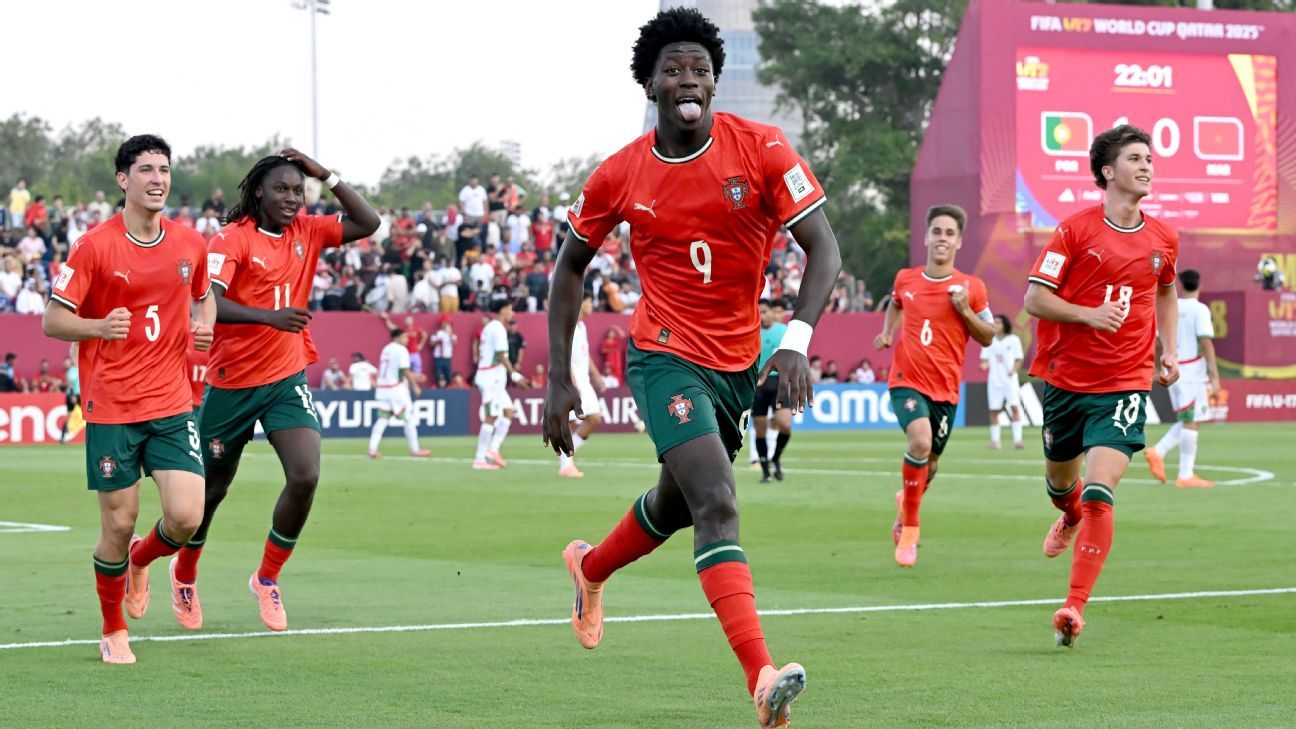
The FIFA U-17 World Cup in Qatar has captivated football fans around the globe, showcasing not just thrilling matches but also an impressive array of young talent. As the tournament concluded, Portugal emerged victorious, defeating Austria 1-0 in a final that many had anticipated. With hundreds of scouts from top European clubs on hand, this competition served as a vital platform for the budding stars of tomorrow.
The Shockwaves of Talent: Individual Standouts
Among the standout performers, Anísio Cabral from Portugal solidified his place in the spotlight. Scoring the winning goal in the final, Cabral has garnered attention as a potential successor to Cristiano Ronaldo for Portugal’s national team. His seven goals throughout the tournament highlighted his sharp instincts, quick decisions, and technical prowess. Cabral’s ability to find space and capitalize on opportunities, coupled with his physical strength, has made him a player to watch in the coming years.
Austria’s Johannes Moser was another revelation, leading his team to the final with remarkable consistency. The attacking midfielder demonstrated exceptional finishing skills, netting eight goals in total, including three penalties executed with pristine composure. His impressive movement off the ball and work rate made him a central figure in Austria’s route to the final, showcasing an instinctive understanding of the game that belies his age.
The Rise of Tactical Versatility
The tournament has also seen the emergence of tactically versatile players who can adapt to different roles effectively. José Neto, a product of Benfica’s academy, exemplified this by playing both as a left-back and center-back. His solid physique and technical skill allowed him to contribute defensively while also offering attacking options, including goals and assists that bolstered Portugal’s campaign. His discipline and ability to integrate with the team’s tactical setup have made him an exciting prospect for top clubs.
Meanwhile, Italy’s Lorenzo Inácio brought creativity and tenacity to the attacking line. Comfortable playing as both a second striker and a No. 10, Inácio was involved in the majority of Italy’s offensive plays. His statistics speak volumes—39 progressive runs during the tournament highlight his capacity to penetrate defenses and create scoring opportunities. Even though Italy faced an unfortunate exit, Inácio’s performance established him as a player with immense potential.
Defensive Excellence and Midfield Magicians
While the spotlight often shines on attackers, the U-17 World Cup also showcased exceptional defensive talents. Rafael Quintas from Portugal stood out as an anchor in midfield. His composure under pressure and ability to read the game allowed him to influence the match’s tempo, helping Portugal maintain dominance throughout the tournament. His tactical awareness and exquisite passing range made him crucial in defensive transitions, helping to shape Portugal’s overall rhythm.
On a different note, Dembélé from Mali astounded spectators with his attacking creativity. Operating primarily as an attacking midfielder or inverted winger, he was a playmaker in every sense of the word. His low center of gravity, coupled with agility and impressive ball skills, allowed him to maneuver through tight defenses effectively. With seven key passes recorded, Dembélé’s ability to create opportunities and control the game’s tempo made him another exciting talent on display.
Opportunism vs. Technical Skill: A Dual Threat
A recurring theme at this year’s tournament was the battle between opportunistic forward play and technical skill. Players like Brazil’s Dell demonstrated how sharp movement and industry could lead to success. Dell’s five goals, primarily scored from close range, highlighted his sense for goal and tactical awareness. His ability to anticipate defensive mistakes marked him as a player more focused on versatility and teamwork than flashy skills, proving that effective positioning can often outshine raw talent.
Contrasting Dell’s opportunism is the youthful exuberance displayed by England’s Heskey. The son of former England striker Emile Heskey, he proved to be England’s most consistent attacker, demonstrating his clean shooting ability and impressive acceleration. Even during England’s disappointing exit, he remained a threat, illustrating the depth of talent that exists in this young generation.
The FIFA U-17 World Cup in Qatar served as a launchpad for future stars, showcasing not merely their skills but also their tactical understanding and adaptability on the field. As these young athletes continue to develop, the world of football is undoubtedly watching, eager for the next chapter in their unfolding stories.