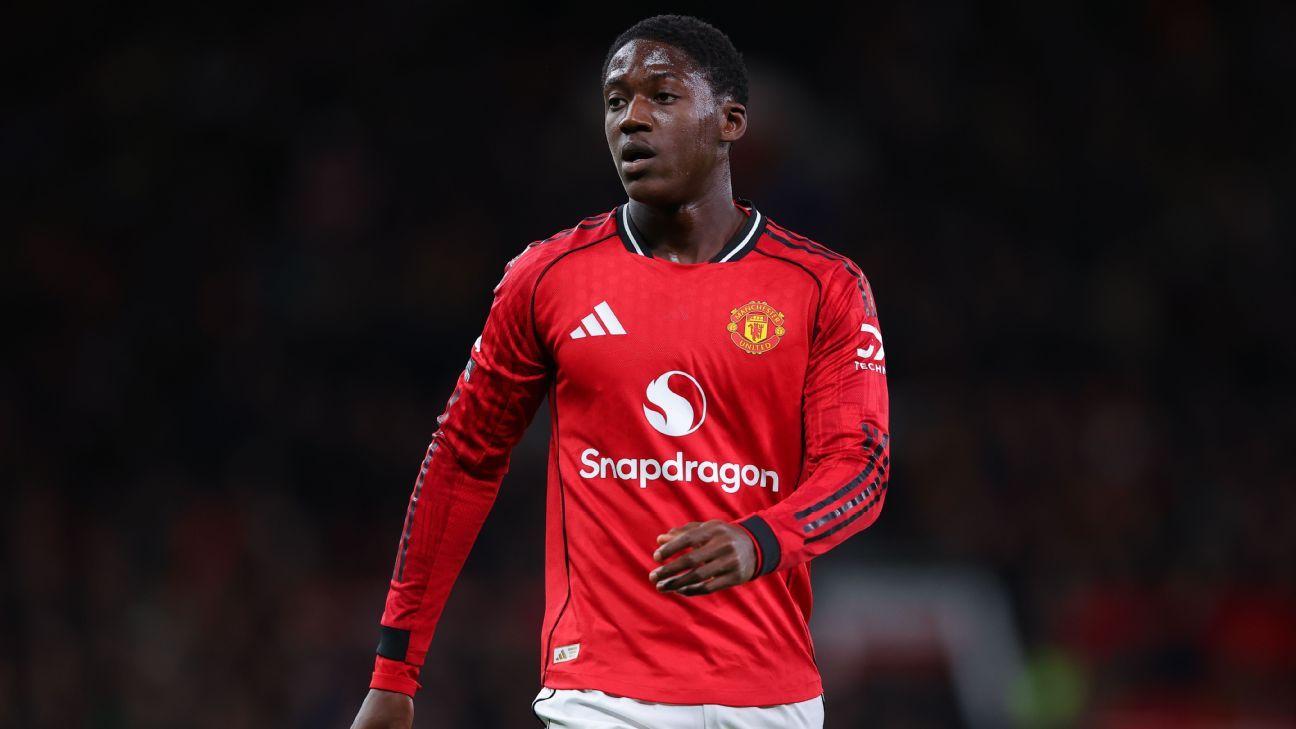
Man United’s Amorim: ‘It’s my call’ on whether to utilize Kobbie Mainoo
The Kobbie Mainoo Dilemma: A Rising Talent in the Shadows
In the world of football, talent can often feel like a double-edged sword, especially when that talent roots itself in the heart of a storied club like Manchester United. At just 20 years old, Kobbie Mainoo has seen his status transform dramatically—from a key player for England in the Euro 2024 final to finding himself sidelined and struggling for minutes under the purview of manager Ruben Amorim. This scenario brings forth crucial discussions about player management, team dynamics, and the intricacies of competition in elite sports.
Ruben Amorim’s Stance
Ruben Amorim has made headlines recently for his unapologetic decision to not regularly include Mainoo in his starting lineup. His defense of this choice underscores a broader football philosophy: that player selection must prioritize current form and team strategy over national affiliations or past accolades. “You love Kobbie, he starts for England,” Amorim remarked when pressed about Mainoo’s absence from the pitch. “But that doesn’t mean that I need to put Kobbie in when I feel that I shouldn’t.” This sentiment resonates in a competitive environment where choices have significant implications not just for individual players, but for the entire squad.
Amorim’s viewpoint illuminates a common challenge faced by managers: balancing talent with tactical needs. The manager emphasized that the objective is to place the “best players” on the field, creating a team-oriented approach over individual recognition. This appears to be especially true as he navigates the current lineup, which features standout performers like Casemiro and Bruno Fernandes, who fill the midfield roles Mainoo aspires to claim.
Mainoo’s Current Predicament
For Mainoo, the struggle for minutes is particularly poignant given his meteoric rise to an England international at such a young age. Eighteen months prior, he was not just an observer in major international matches; he was in the starting eleven for the Euro 2024 final, showcasing his potential on one of football’s biggest stages. Fast forward to the current season, where he has yet to start a Premier League game, and his total league involvement has been a meager 171 minutes. The contrast is stark and certainly causes concern for Mainoo’s development and aspirations.
This unexpected dip could have long-term repercussions on his national team prospects as the World Cup approaches. Amidst growing interest from clubs like Napoli and those in the Premier League and Bundesliga, Mainoo is reportedly considering a loan move in January to secure regular playing time. This is a critical juncture for a player of his caliber, highlighting the urgent need for actionable opportunities to hone his skills and maintain trajectory in a competitive landscape.
The Future: Possibilities for Mainoo
As Manchester United gears up for the challenges posed by the upcoming Africa Cup of Nations, the vacuum left by departing players like Bryan Mbeumo and Noussair Mazraoui opens a window of opportunity. Despite this, Amorim’s response to whether this would lead to increased chances for Mainoo was non-committal: “I don’t know what is going to happen… I’ve seen the training, and if it’s the best thing for the team, I will put him in.” This delicate balancing act reflects the unpredictability inherent in football management.
The situation emphasizes a transformational moment not just for Mainoo but also for Amorim as a manager tasked with fostering a competitive and cohesive team. With training intensifying and the season progressing, the focus will be on whether Mainoo can leverage his talents and potential to seize the opportunities afforded by the evolving team dynamics.
The Broader Implication: Player Development in Modern Football
The discussion surrounding Mainoo serves as a microcosm of larger trends in modern football—a sport that continually grapples with the balance of nurturing emerging talent versus immediate success on the pitch. Clubs like Manchester United place an immense emphasis on results, ultimately leading to decisions that may neglect promising players who are not contributing at that very moment.
This added pressure creates an environment where players may easily feel disillusioned, prompting them to seek opportunities elsewhere. For clubs, this means being strategic not only in how they utilize player rosters but also in maintaining morale and development pathways for young talent. Such dynamics make Mainoo’s journey crucial for understanding how elite football clubs must adapt and respond to maintain both competitive relevance and player satisfaction in an evolving landscape.
As the season unfolds, all eyes will be on Kobbie Mainoo—not just to see if opportunities arise for him at Manchester United, but to observe how a young player navigates the complexities of ambition, talent, and the daunting task of making it in professional football.