
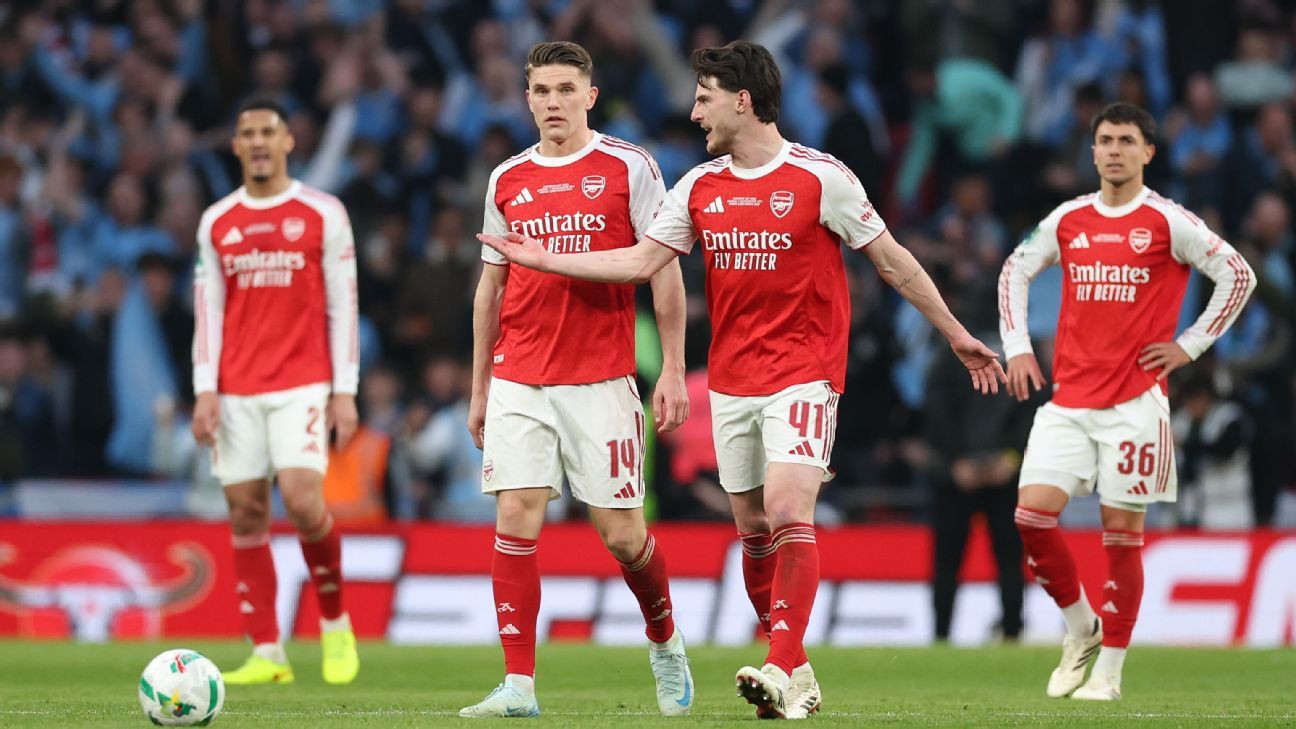
How the Premier League standings would appear without goals from set pieces.
The Set-Piece Revolution: How Arsenal Capitalized on a Tactical Shift in the Premier League
As the Premier League season unfolds, one undeniable trend has caught the attention of fans, analysts, and players alike: the resurgence of set-piece goals. In a sport constantly in flux, where tactics evolve and styles shift, the significant rise in goals scored from free kicks, corner kicks, and throw-ins is noteworthy. The numbers support this transformation. Compared to recent seasons, open-play goals have plummeted, leaving teams like Arsenal uniquely poised to take advantage.
The Changed Landscape of Scoring
This season, the Premier League has seen over a 20% decrease in goals scored from open play compared to the last two campaigns. Specifically, by the 31st matchday, teams had only managed to net 615 goals from the run of play, a stark contrast to 798 and 737 in the prior seasons. Arsenal, recognizing the burgeoning value of set-piece goals, has thrived in this new environment. They lead the league with 21 goals from set plays, showcasing a tactical shrewdness that other clubs, such as Manchester United with their paltry plus-six set-play differential, have yet to embrace.
The tactical landscape has undoubtedly changed, and those clubs that adapt quickly are reaping the rewards. Arsenal’s dominance in set-piece scenarios has not just been about the quantity of goals scored; it has also been about maintaining defensive integrity, conceding only eight goals from set plays. In a league that has grown increasingly competitive, this advantage has propelled them toward the championship.
The Alternate Reality: Imagining a Set-Piece-Free League
What if we could erase set-piece goals entirely? In a hypothetical analysis, if all goals from set plays were removed from the Premier League’s statistics, the narrative of this season shifts dramatically. By stripping away these set-piece contributions, teams would have to rely solely on open play, fundamentally altering the league’s dynamic.
In this alternate reality, we would witness a more frenetic pace of play. Mid-table clubs known for their reliance on physicality and set pieces might thrive, as their defensive structures would remain intact without the threat of set plays. On the other hand, top clubs struggling to maintain efficacy in open play would likely suffer, changing the trajectory of title races, relegation battles, and even player statistics.
For instance, teams like Liverpool or Chelsea, who typically capitalize on set plays to relieve pressure and score, might find themselves on the back foot, as they are forced to rely solely on intricate passing and dynamic attacks. The inherent unpredictability of open play would lead to an even more chaotic league, filled with lower-scoring games and a greater emphasis on tactical creativity.
Premier League Trends: The Rise of Arsenal and the Struggles of Rivals
As the season progressed through its early weeks, Arsenal’s approach began to pay dividends. Mikel Arteta’s team showcased a low-event style that stifled opponents, allowing them to remain defensively resolute. While other clubs scrambled to find their footing, Arsenal stood firm with only one goal conceded through five matches. However, this came at a cost, with only two wins to their name.
Notably, clubs like Liverpool and Manchester City started strong but encountered bumps along the way. Liverpool’s title defense faced scrutiny, especially during a spell of three consecutive games without a goal. In contrast, Arsenal began to win matches, capitalizing on their efficient set-piece execution while their rivals faltered.
A deeper look into the table during these periods highlights how pivotal set pieces have become. Clubs that may have been late bloomers without a reliance on these set plays could very well have found themselves relegated or without European qualifications, in stark contrast to the current state of affairs.
The Midpoint Battle: Tight Pursuits and Tactical Adaptations
As the season approached the halfway mark, Arsenal, Manchester City, and Liverpool found themselves embroiled in a fascinating three-way title race. Each match took on increased significance, with set pieces often proving decisive. Arsenal’s ability to convert scoring opportunities through dead-ball situations began to define key matches, solidifying their top-two standing.
Conversely, the pressure became an albatross around Liverpool’s neck as they struggled to blend flair with consistency. In an environment where set plays heavily influenced outcomes, the ability to adapt became paramount. Clubs rapidly adjusted their defensive setups, utilizing more disciplined markers during corners and free kicks to mitigate the threats posed by Arsenal and their ilk.
Player form also played a critical role; top talents found their days made easier or harder depending on whether opportunities presented themselves during set-piece scenarios. Stars like Alexander Isak of Liverpool, who struggled to find the net, often felt the weight of expectation unfulfilled. Meanwhile, Arsenal benefited immensely from unique set-piece designs, crafted through meticulous training and tactical analysis, allowing them to remain at the forefront of the title hunt.
The narrative around the Premier League extends beyond a mere tally of goals or points; it speaks to the very essence of football — adaptation, survival, and strategic innovation. With set pieces redefining pathways to goal, the tactical chess game within the league has transformed the beautiful game into an even more captivating spectacle. Arsenal’s embrace of this new reality just might echo through the storied history of the Premier League, leaving a legacy that shines a light on the intricate dance of tactics that govern the sport.