FIFA: U.S. Government to Assess Safety of 2026 World Cup Host Cities
The Intersection of Politics and Sports: FIFA, the World Cup, and U.S. Safety Concerns
In an unprecedented development, FIFA confirmed that the safety of World Cup host cities in the United States falls under the jurisdiction of the U.S. government. This announcement has sparked a wave of discussions regarding the interplay between sports, governmental authority, and public safety. As the 2026 World Cup approaches, the implications of such political dynamics become increasingly significant, especially in light of U.S. President Donald Trump’s recent remarks about the possibility of relocating matches from cities he perceives as unsafe.
The Role of Government Oversight in International Events
FIFA’s decision to defer to the U.S. government on security matters highlights the complexities involved in hosting major international events like the World Cup. A FIFA spokesperson has emphasized that safety is paramount in football and that governments are responsible for determining the best interests of public safety in their respective locations. This is particularly consequential given the scale of the World Cup, which attracts millions of fans, athletes, and media from all over the globe.
This relationship underscores a crucial point: while FIFA oversees the organization of the World Cup, the ultimate authority concerning public safety and security rests with U.S. federal and local authorities. Trump’s remarks about moving matches away from specific cities, such as Boston, Seattle, and San Francisco, reflect a broader concern about the perceived safety of urban environments. The implications of this dynamic become especially pronounced when considering Trump’s hinted willingness to take such drastic measures if the local government fails to address safety issues adequately.
The Political Landscape: Trump and Infantino
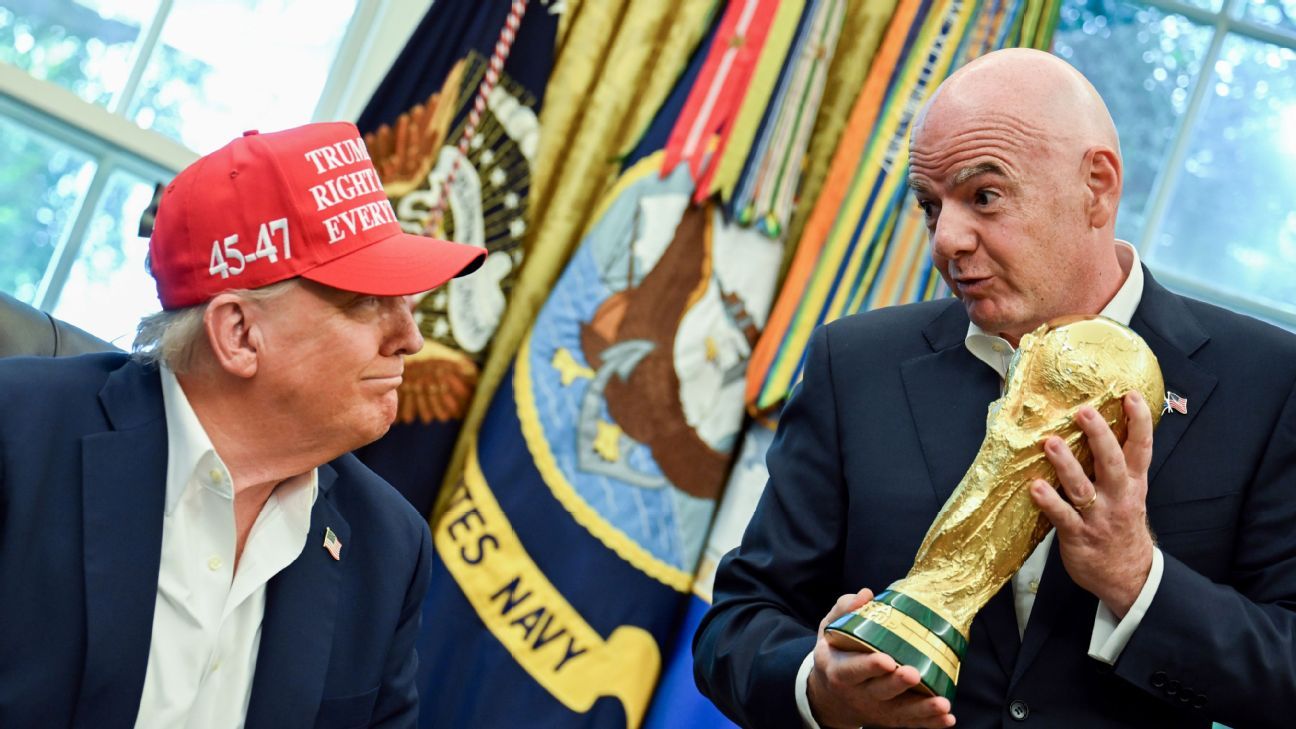
President Trump and FIFA President Gianni Infantino’s evolving relationship adds another layer of complexity. Trump’s assertion that Infantino could “very easily” relocate World Cup matches has raised eyebrows, underscoring just how intertwined sports and politics have become. Historically, international sporting events have been platforms for showcasing cultural identity and national pride, but their association with political figures can sometimes detract from their intended purpose.
Despite Trump’s history of outspoken views on safety, FIFA has maintained its stance that it trusts all 16 designated host cities to meet the necessary requirements for safety and compliance. Infantino has nurtured a relationship with Trump, evidenced by their joint appearance at a recent peace summit in Egypt. This connection raises questions on whether FIFA could become too closely aligned with political narratives, potentially influencing perceptions of neutrality in global sports governance.
Safety Concerns: A Pretext for Political Maneuvering?
Trump’s comments about “dangerous” cities can be seen as more than mere expressions of concern; they reflect an attempt to exert influence over how international events unfold within U.S. borders. While it is crucial to prioritize safety, the implications of moving matches based on political judgments may set a precarious precedent. The fear of instability in certain cities—exacerbated by incidents like “street takeovers” that Trump referred to—could allow for an unpredictable running of events that could destabilize cities’ economic outlooks and tourism revenue.
This raises questions about the motivations behind such threats. Are they genuinely about public safety, or do they reflect a broader political agenda? The International Olympic Committee (IOC) has assured that preparations for the 2028 Los Angeles Olympics are on track, showcasing a commitment to conducting events without political interference. The Olympics, like the World Cup, are susceptible to external factors, but a focus on collaboration among governmental and sports entities suggests a more unified approach, separate from political posturing.
Public and Organizational Reactions
Reactions from FIFA officials and governing bodies indicate a resistance to political interference in sporting events. FIFA vice president Victor Montagliani’s comments—that football transcends political figures and regimes—serve as a pushback against the notion that sports should be dictated by political whims. This assertion emphasizes the integrity of the sport and the governance structures surrounding mega sporting events.
Certainly, the IOC has reiterated confidence in the Los Angeles Olympic preparations, framing a narrative that supports the ideal of a politically neutral platform for international athletes. While Trump’s remarks concerning both the World Cup and the 2028 Olympics raise valid concerns regarding safety, the ongoing discussions reflect a much larger conversation about the relationship between sports, politics, and society.
As the world looks towards the upcoming World Cup and Olympic Games, the importance of safeguarding the integrity of these events, free from political turmoil, remains paramount. The dynamics at play between FIFA, the U.S. government, and the public illustrate a complex and evolving tapestry, where the world of sports and international governance converge in ways that will resonate long after the final whistle blows or the Olympic flame is extinguished.