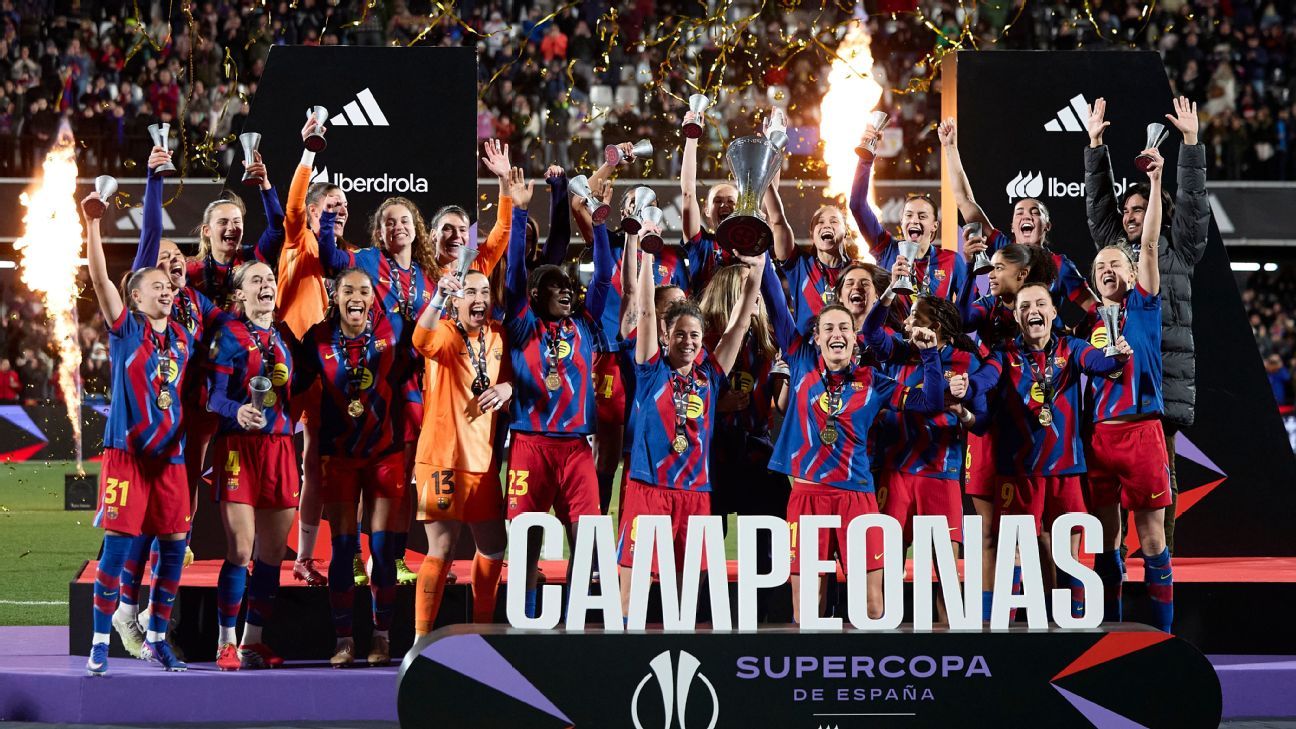
Barcelona prevents Madrid from claiming another title, but the distance is narrowing.
Barcelona Triumphs in Spanish Supercopa: A Battle With Real Madrid
In the realm of women’s football, few rivalries are as electric as that between FC Barcelona and Real Madrid. Their latest encounter in the Spanish Supercopa final on a brisk afternoon in Castellón served as a vivid reminder of this age-old rivalry. Barcelona emerged victorious, claiming a convincing 2-0 win over Real Madrid, but the match encapsulated more than just the scoreline; it highlighted the evolving dynamics between the two clubs.
The Game’s Turning Points
Barcelona’s victory was not just a product of their skill and strategy; it was also shaped by critical moments that defined the match. The first real point of contention arose in the 28th minute when Barcelona’s Esmee Brugts capitalized on a corner taken by Mapi León. Brugts’ deft header rattled the net and set the tone for the rest of the match. Real Madrid’s goalkeeper, Misa Rodríguez, who had previously dealt with a barrage of attacks—including 18 shots from Barcelona—was left with little chance. Despite her valiant efforts, including multiple crucial saves throughout the match, it was clear that Madrid was fighting an uphill battle.
The game remained tense and competitive, with Madrid’s defense, bolstered by Rodríguez, holding firm for much of the second half. Yet, as Barcelona continued to press forward, the moment came in the dying minutes. A penalty awarded to Barcelona in added time, following a foul in the box, was ultimately converted by the two-time Ballon d’Or winner, Alexia Putellas. With a precise shot that sent Rodríguez the wrong way, Barça sealed their victory in style, leaving Madrid’s players to ponder what might have been.
A Glimpse of Madrid’s Potential
While the scoreboard told a familiar tale, the match revealed a pivotal shift in the competitive landscape of women’s football in Spain. For Real Madrid, who were formed only in 2020 and are still in search of their first trophy, there was a sense that they are closing the gap with their arch-rivals. Head coach Pau Quesada expressed his team’s frustration, noting, “It makes us angry, not so much thinking about their two goals—which is something we have to improve on—but because those good feelings don’t give us the Supercopa.” His sentiment echoed within the locker room where players recognized moments of brilliance that could easily have swung the match in their favor.
Real Madrid showcased an impressive defensive effort, particularly in the first half. Despite facing sustained pressure, including 12 shots on target, the team managed to create moments of opportunity. A standout chance in the 58th minute saw Ewa Pajor going one-on-one with Rodríguez, only for the keeper to pull off another spectacular save. These instances reflect a growing resilience in Madrid’s game, but it also underlines a harsh reality: potential must convert to results for success to materialize.
The Rivalry and Its Evolution
This latest clash was not just another chapter in the rivalry; it served as a significant marker of how far each club has come and how the narrative of women’s football in Spain is evolving. Barcelona’s dominance in recent years is well-documented, with Saturday’s win marking their sixth Supercopa trophy and fifth consecutive title. However, Real Madrid’s emergence as a competitive force adds complexity to this storyline.
Last March, Madrid secured their first historic win over Barcelona in their 21 encounters, a 3-1 victory at Montjuïc that stunned spectators. This felt like a turning point that could propel Madrid to greater heights. The battle for dominance is characterized by more than just statistics; it’s an emotional tussle that plays out on the pitch with every pass and tackle.
Coach Pau Quesada reiterated this point, emphasizing that the “good feelings” generated from competitive play is vital for growth but that tangible success is the ultimate goal. Madrid’s inability to capitalize on those feelings this time around leaves an ache in the hearts of fans and players alike.
Looking Ahead: The Champions League Challenge
While the Supercopa marked a setback for Real Madrid, the focus will now shift to the UEFA Women’s Champions League, where they hope to navigate past Paris FC in a playoff that will determine their quarterfinal fate. The stakes couldn’t be higher, particularly as they look to establish themselves not just domestically but on a European level.
Barcelona, on the other hand, carries rich European pedigree, having been crowned Champions League winners three times and reaching the finals on six occasions. Their experience and tactical prowess in continental competitions loom large over their rivals. Yet, the performance showcased by Madrid in the Supercopa indicates that they are not to be overlooked. The shadows of old struggles begin to fade as Madrid establishes itself as a credible threat—one that could bridge the gap between the two Spanish heavyweights.
As this rivalry unfolds, the evolution of both teams will continue to define the landscape of women’s football in Spain. In the world of sport, nothing is constant except change, and Real Madrid’s relentless pursuit of silverware may soon lead them to challenge not just for domestic supremacy but for European glory as well. The journey ahead is charged with ambition, and one thing is certain: the rivalry between Barcelona and Madrid is only just heating up.