Alonso had his flaws, but firing him overlooks Madrid’s true issues.
The Rise and Fall of Xabi Alonso: A Tale of Real Madrid’s Unforgiving Landscape
The Weight of Expectations
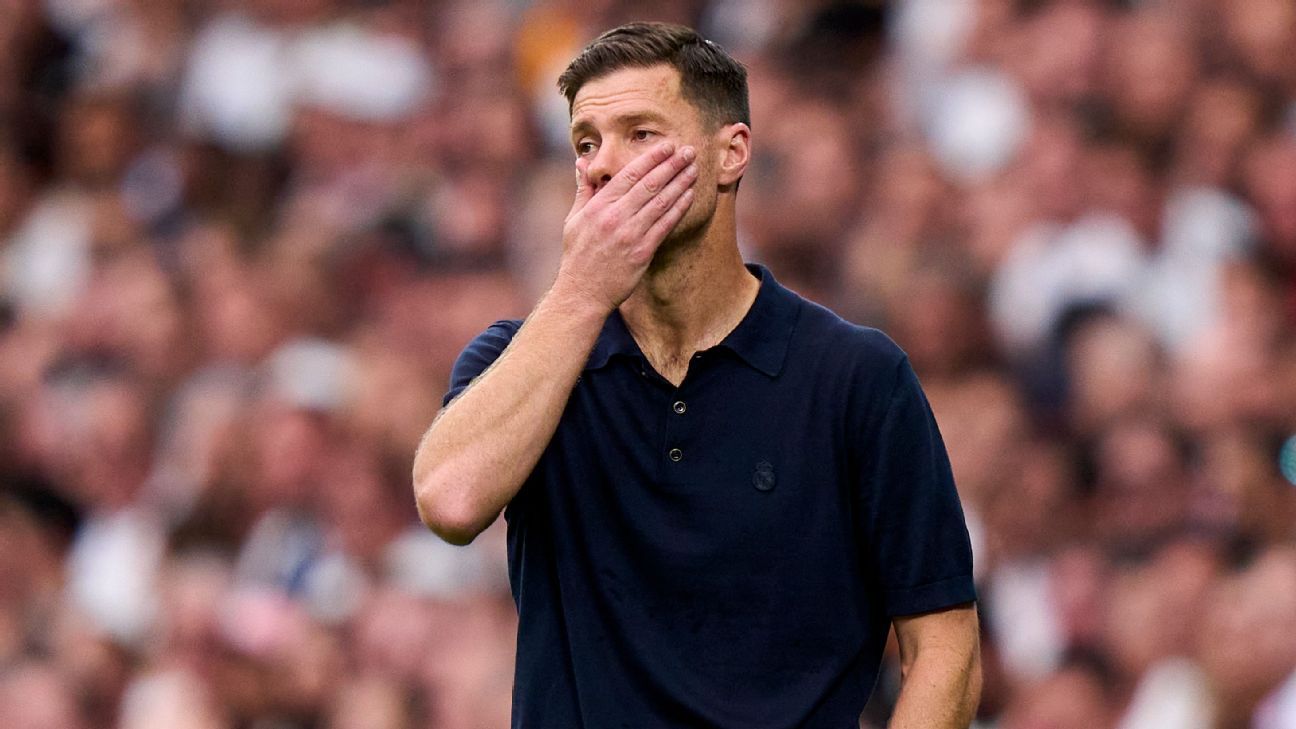
In January 2026, Xabi Alonso was sacked as the manager of Real Madrid, making him the tenth permanent coach to fall victim to Florentino Pérez’s relentless pursuit of success. Just shy of his one-year anniversary at the helm, Alonso’s dismissal followed a heart-wrenching loss to Barcelona in the Supercopa final. It had been a tumultuous season for the 44-year-old, initially lauded for his impressive transition from player to coach, especially after leading Bayer Leverkusen to their first Bundesliga title. Yet, in the world of elite football, successes can be fleeting—especially in a club where history weighs heavily on present performances.
Alonso’s tenure began with promise. Real Madrid showcased flashes of flair and resilience, positioning themselves as serious contenders in multiple competitions. However, losing to archrivals Barcelona, especially when silverware is on the line, brings with it immense repercussions. The Santiago Bernabéu, a bastion of footballing ambition, is unforgiving, and one slip against their fiercest rival can spell doom for even the most esteemed of managers. Alonso, who had already navigated a tumultuous relationship with high-profile players, faced unprecedented challenges as public expectation soared, leaving little room for error.
The Clash with Public Image
Another pivotal moment in Alonso’s tenure involved an incident with star player Vinícius Júnior. In a high-stakes match last October, Alonso made the critical decision to substitute the Brazilian player, who responded with a public outburst, claiming he would leave the club. This not only jeopardized Alonso’s standing with the team but also put a strain on his relationship with Pérez, who highly valued maintaining the squad’s harmony and morale. Despite successfully managing the fallout subsequent to that incident, the damage to his reputation appeared irreversible, making it evident that any subsequent missteps could lead to severe consequences.
Pérez’s stewardship has always been characterized by a ruthless pragmatism; loyalty is often secondary to achieving glory. In this atmosphere, public image becomes crucial—a notion Alonso underestimated. His attempts to mend fences with Vinícius showcased his leadership capabilities, but they also highlighted the precarious tightrope he had to walk. Balancing the needs of high-profile players with the demands of a cutthroat organization proved increasingly difficult, and the public’s perception of his management style became a determining factor in his fate.
The Barcelona Bête Noire
Losing to Barcelona in a prestigious final provokes a visceral reaction, echoing through the historical rivalry that punctuates Spanish football. For Real Madrid, falling short against their greatest rival isn’t merely a loss; it’s an affront to the club’s identity. Almost a month prior, a reflective piece suggested that Alonso would find respite if he could guide his squad to victory against either Barcelona or Atlético Madrid in upcoming matches. However, catastrophe struck when they returned empty-handed. Failing to secure silverware not only robbed him of immediate vindication but also intensified scrutiny about his overall capabilities.
In the eyes of Pérez—who has overseen multiple coaching changes, each followed by varying levels of success—losing to Barcelona was tantamount to a cardinal sin. Alonso’s tenure was thus set against the backdrop of a harsh reality: victories must be frequent and decisive, especially against Madrid’s archrivals. This match’s implications shouldn’t merely be viewed through the immediate lens of results but rather within the psychological frameworks that make a managerial stint successful or disastrous.
Navigating the Political Sharks of Madrid
Alonso’s is a story marked not just by football tactics or player management but also by the politics innate to managing a prestigious club. He was known for his standoffish demeanor toward the media, a trait that contrasted sharply with the polished, diplomatic approaches favored by his predecessors. The media landscape around Real Madrid is a veritable minefield, filled with narratives shaped and influenced by Pérez’s agenda. It took Alonso time to adopt a more engaging tone with journalists, but by the time he did, the damage in terms of public perception was already festering.
Moreover, his failure to effectively “manage upward” in a structure where Pérez often dominates may have sealed his fate. Pep Guardiola’s recent support for Alonso came with its own repercussions—the tone adopted in the post-match discussions hinted at a disconnect that left a lasting impression on the Madrid board. Alonso’s inherent respect and status didn’t translate into the diplomatic acuity necessary to navigate such terrain, leading to a schism that could not be bridged.
As Alonso prepares to depart from a club that identified him as a future star coach, the lessons gleaned from his brief tenure are emblematic of the complexities faced by managers in such a high-pressure environment. Ultimately, Real Madrid is not simply a football club; it is a crucible where character, resilience, and the ability to adapt determine who survives and who fades into the annals of history. Xabi Alonso’s story, while distinctly marked by the heights of his playing career, serves to remind us that the managerial world is a tougher arena, especially when every decision could lead to glory or ignominy.