FIFA’s Infantino accused of targeting British fans with a ‘cheap jab’
FIFA President Infantino’s Controversial Remarks and the Specter of Ticket Prices
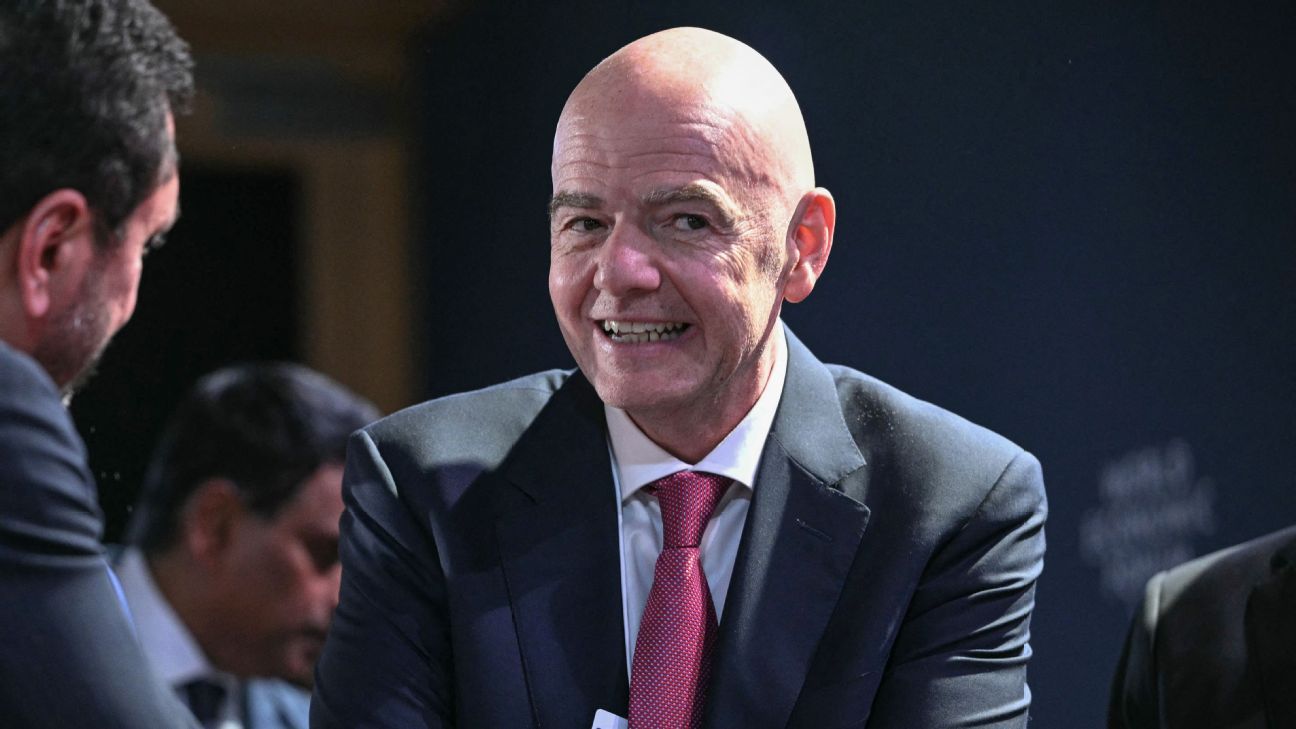
In a striking moment at the World Economic Forum in Switzerland, FIFA President Gianni Infantino stirred controversy with a seemingly innocuous remark about British fans during a speech addressing global leaders. As discussions around this summer’s World Cup finals in the United States intensify, his comments about the absence of arrests of British fans during the Qatar World Cup were met with backlash, illustrating the complicated landscape of international soccer and fan culture.
Laughter Amidst Unrest: Infantino’s Divisive Charm
Infantino’s speech aimed to celebrate the spirit of football, sharing successes from the last World Cup while acknowledging concerns over rising domestic tensions in the U.S. His quip about how “no Brit was arrested during a World Cup” was likely intended to invoke humor and highlight a narrative of successful organizing around Qatar 2022. “Imagine! This is something really, really special,” he said. However, the Football Supporters’ Association, which represents fans in England and Wales, was quick to condemn this as a “cheap joke” at their expense, instead urging Infantino to focus on more substantive issues, like ticket affordability.
His comments reflect how humor in high-stakes addresses can misfire, particularly when connected to complex narratives around fan experiences and national pride. This incident encapsulates the larger tensions surrounding the World Cup, where fan safety and accessibility are often overshadowed by administrative gestures meant to charm an audience.
The Price of Passion: Ticket Pricing Controversy
Though Infantino attempted to pivot to the issue of ticket prices, the juxtaposition with his previous comments only fueled further criticism. With ticket requests for the 2026 event surpassing 500 million, it is unsurprising that the conversation quickly steered towards the staggering cost of attendance. The second-cheapest tickets for the finale priced at $4,185 USD (£3,100) sparked outrage among fans, especially given that only a fraction of tickets were available in the lowest category, which cost a mere $40.
Infantino acknowledged the criticism, stating, “We were hammered…because they are so expensive.” This admission was evocative, as it revealed the underlying frustration many fans face in accessing major sporting events. While his declaration that every match will be sold out indicates a healthy demand for the game, the reality of prohibitive pricing casts a shadow over this enthusiasm.
Demand vs. Accessibility: A Call for Responsible Pricing
As Infantino touted the unprecedented demand—with ticket requests equaling a thousand years of World Cup history—one must question how this demand will be balanced with affordability. The football traditionalist often romanticizes the World Cup as a festival for the masses, yet the skyrocketing prices invite skepticism about the event’s accessibility to average fans. FIFA’s ticket resale platform, while intended to optimize accessibility, risks inflating prices even further, igniting fears that the spirit of the World Cup may become an elite affair.
This paradox raises a critical discourse: Does FIFA have a responsibility to ensure that its widespread popularity translates to inclusivity? As fans continue to voice their grievances, the association must grapple with the realities of economic disparity in sports. Infantino’s comments served as a harsh reminder that, while football can unite, it can also divide—especially when ticket prices alienate significant segments of the fanbase.
Navigating Immigration Challenges: A Host’s Pledge
Amidst the excitement brewing for the upcoming World Cup, Infantino also addressed potential barriers for international fans traveling to the U.S., especially given the evolving immigration landscape. Reports suggesting that fans from certain countries might face visa denials received a firm rebuttal from Infantino, who maintained, “these are not true.” His reassurance comes at a crucial juncture, as tensions surrounding immigration policies under the Trump administration add layers of complexity to the event.
The FIFA president’s broader assertion—that the U.S., Canada, and Mexico will welcome the world next summer—highlights a commitment to fostering inclusivity at a time when sports often transcend borders and bring diverse communities together. Yet, the reality of ever-shifting political climates poses challenges that cannot be overlooked. Infantino’s insistence on an open-door policy, especially as an emerging narrative of hostility scales through geopolitical tensions, is both a bold and necessary claim for the future of global sporting events.
In summary, the recent remarks made by Gianni Infantino illustrate a mélange of humor, economic realities, and political intricacies that will shape the narrative leading up to the highly anticipated 2026 World Cup. As FIFA prepares for what it aims to be a celebratory gathering of sportsmanship, the dialogues surrounding fan experience will remain front and center, demanding attention and action rather than mere rhetorical flourish.