
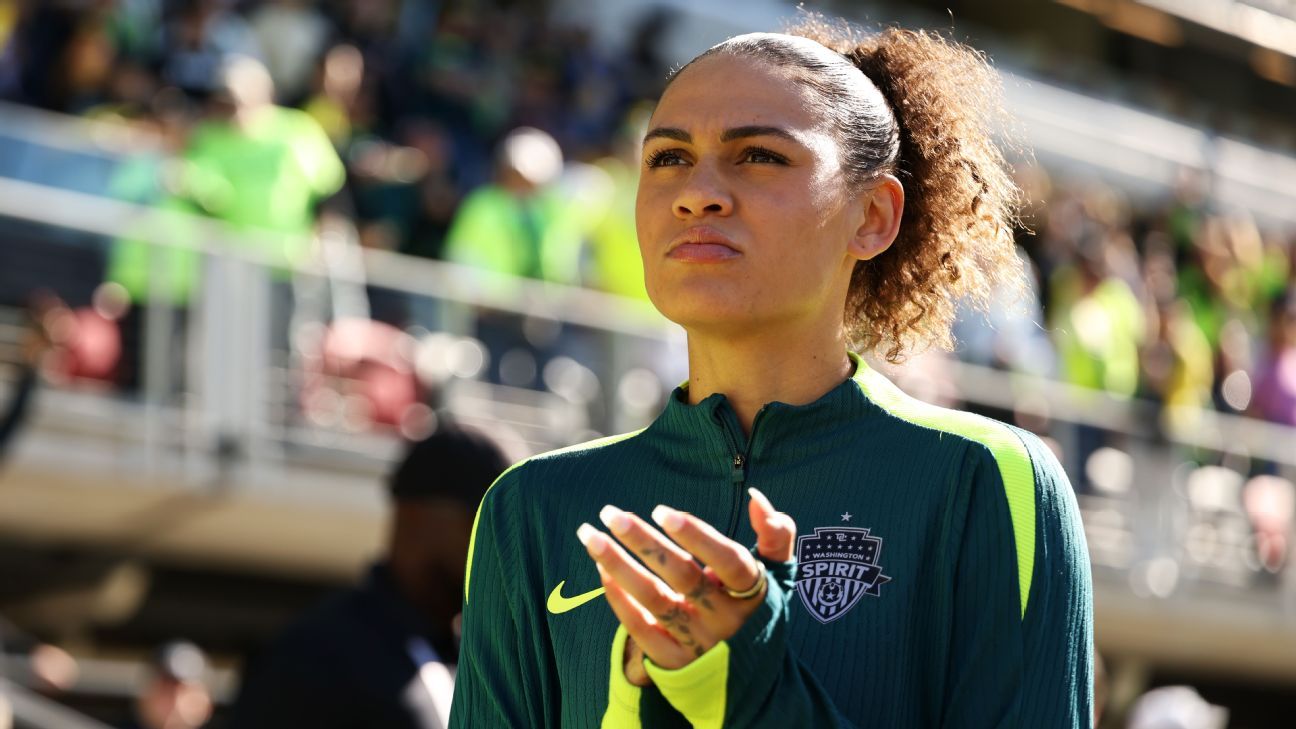
Source: Uncertainty Surrounds Rodman’s Spirit Amid NWSL Negotiations
The Future of Trinity Rodman: A Pivotal Moment for Women’s Soccer
The Rising Star of Trinity Rodman
At just 23 years old, Trinity Rodman has emerged as one of the most electrifying talents in women’s soccer, captivating fans and pundits alike with her dynamic playing style. As a forward for the Washington Spirit and the United States Women’s National Team (USWNT), Rodman’s precocious skill set and flair have set her apart as not only a rising star but a pivotal figure in the future trajectory of the National Women’s Soccer League (NWSL). Her impact on the pitch is undeniable; her speed, technical prowess, and ability to score crucial goals have made her a household name in American soccer.
Yet, as Rodman gears up for Saturday’s NWSL semifinal at Audi Field, fans are left to ponder a haunting question: is this the last time she’ll don the Spirit jersey at home? With her contract expiring next month and international interest swelling, her future hangs delicately in the balance, one that could reshape the landscape of women’s soccer in the United States.
The Financial Landscape of NWSL
While Rodman showcases unrivaled talent, the financial restraints within the NWSL pose significant challenges. The current salary cap for each team stands at $3.5 million, which has proven insufficient for retaining marquee players like Rodman amidst growing financial offers from clubs abroad. The league has made strides in increasing its competitive framework, but it remains limited by its financial structure, making it difficult to match the lucrative salaries available in Europe.
Interest from overseas clubs has reached a fever pitch, with offers reportedly landing on Rodman’s desk from several European teams. These clubs are not bound by salary cap restrictions, enabling them to make financial propositions that exceed what the Spirit can feasibly offer. For a player of Rodman’s caliber, this puts her in a position where she must weigh loyalty against opportunity, an increasingly common dilemma for athletes in the evolving landscape of women’s sports.
The Discussion Around Salary Cap Reform
As conversations swirl about Rodman’s potential exit, it’s essential to address the broader implications for the NWSL. Discussions surrounding salary cap reform have intensified, especially with changes outlined in the recently signed collective bargaining agreement. The cap is projected to increase gradually, reaching $5.1 million by 2030. However, this transition is slow, and many wonder whether it will come swiftly enough to retain top talent.
NWSL commissioner Jessica Berman has acknowledged the need for a flexible approach concerning player salaries. There is talk of implementing changes similar to Major League Soccer’s Designated Player rule, which allows teams to sign high-profile players outside of the salary cap framework. As negotiations continue, Rodman’s situation may serve as a catalyst for more immediate reforms. But convincing team owners and league officials to embrace such changes remains a formidable challenge, one that could define the league’s future.
The Broader Impact on Women’s Soccer
Rodman isn’t the only star flirting with opportunities overseas. Over the past year, the NWSL has seen an exodus of talent as players like Alyssa Thompson and Naomi Girma have made high-profile moves abroad, drawing significant transfer fees and salaries that reflect their market value. This trend raises questions about the overall health of the NWSL and the staying power of its most talented players.
The league must contend with not just its financial limitations but also the perception of its viability as a premier destination for female athletes. Berman has emphasized the “value proposition” of the NWSL—championships, fan engagement, and community impact—but is that enough to outweigh the tantalizing offers from overseas? As athletes evaluate their options through a holistic lens, the NWSL must proactively innovate to attract and retain top talent amidst intensifying competition.
Trinity Rodman sits at a complex intersection of talent, ambition, and opportunity, embodying the challenges facing women’s soccer at large. Whether she stays in the NWSL or heads abroad, her decision will resonate far beyond her own career, influencing the league’s ability to retain its star players and the future direction of women’s soccer in the United States.