
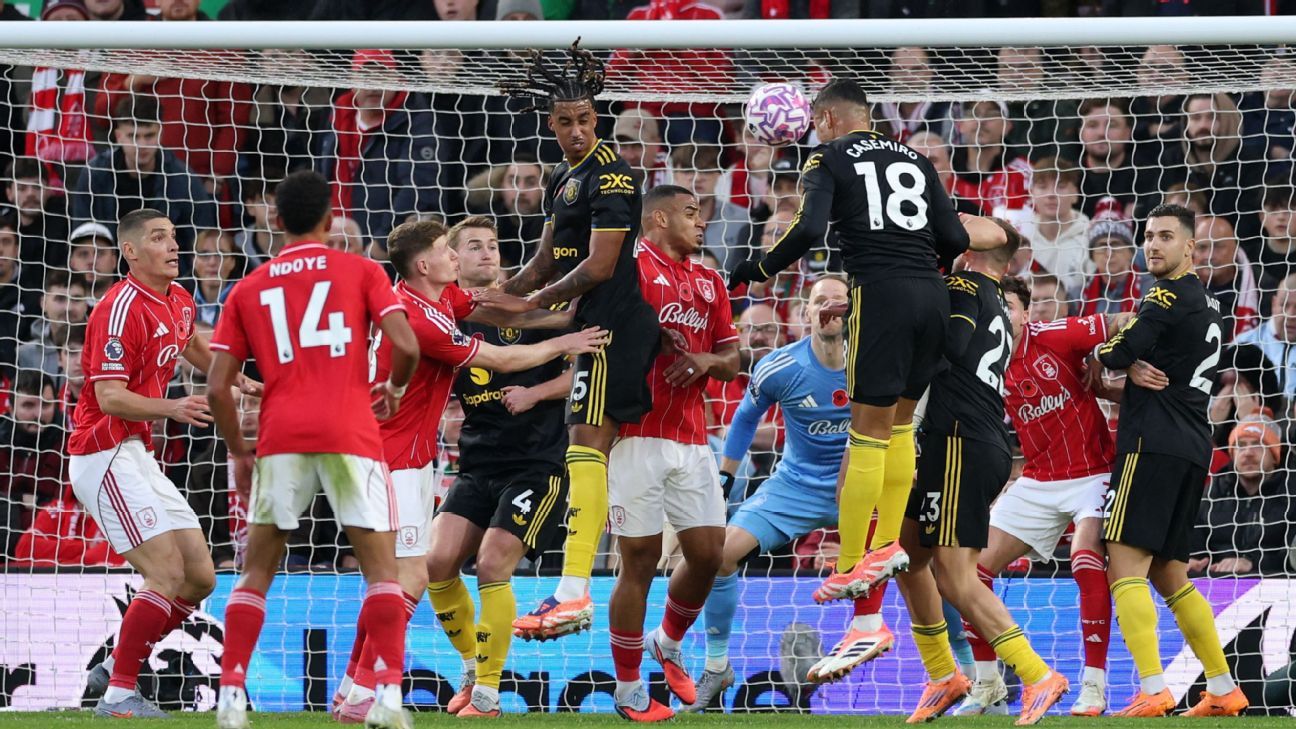
VAR Analysis: Reasons Behind VAR’s Lack of Involvement in Man United vs. Forest Corner Controversy
Understanding VAR Controversies in the Premier League
The Video Assistant Referee (VAR) has sparked heated debates and discontent among football fans and analysts alike. Each week in the Premier League, contentious decisions arise, often leaving players, coaches, and supporters confused about the VAR protocols and the underlying Laws of the Game. This article delves deeper into how VAR operates, the rationale behind specific decisions, and examines key incidents that fueled controversies over the recent season.
The VAR Protocols: How Decisions Are Made
VAR was introduced to assist on-field referees in correcting clear and obvious errors related to goals, penalty decisions, straight red cards, and cases of mistaken identity. However, the nuances of this technology and its implementation within the framework of the Laws of the Game create an intricate dance that can often complicate matters.
When an incident warrants a VAR check, the VAR team must first assess whether the on-field decision was a clear mistake or if it’s a subjective judgment best left to the referee. For instance, during a match between Nottingham Forest and Manchester United, an incorrect corner award led to a United goal, igniting a furious response from Forest’s players and supporters. The assistant referee’s view was obstructed, yet VAR was unable to review this type of decision under its current protocols. While the Laws of the Game stipulate that the ball is out of play only when it has “wholly passed over the goal line,” the VAR system’s limitations mean that subjective calls, such as the assistant referee’s judgment regarding the ball’s status, cannot be corrected post-factum.
This incident illustrates the ongoing tension between the rules that govern VAR’s usage and the expectations of the fans who often seek more immediate justice on the pitch.
Reflections from the Experts
Andy Davies, a former elite match official, provides invaluable insights into how VAR decisions are reached. He explains that the rationale behind using VAR hinges on having clear evidence against the referee’s decisions. In scenarios like the Nottingham Forest incident, where the decision-making process falters due to obstructed views, fans are left feeling disenfranchised. The conundrum remains: the VAR cannot intervene effectively, yet the outcomes, as we know, can be game-changing. This brings us to a broader conversation about whether the protocols need revisiting or if there’s another way to enhance transparency and fairness.
The Subjective Nature of Referee Decisions
Refereeing in football is inherently subjective, and this has exacerbated the controversies surrounding VAR. For instance, a recent incident involving Chelsea’s Reece James and Tottenham’s Rodrigo Bentancur raised eyebrows regarding the classification of serious foul play. The on-field referee, Jarred Gillett, opted to issue a yellow card rather than a straight red. The VAR, Craig Pawson, revisited the challenge but sided with the referee’s decision, indicating that the level of force did not warrant a more severe punishment.
The complexities arise when having to determine the “intent” behind a tackle versus the physicality of the challenge itself. Slow-motion replays can dramatically shift perceptions, often making a challenge appear more egregious than it was in real time. This creates fertile ground for debate: what one referee deems reckless may leave another shaking their head in disbelief. Davies emphasizes that refocusing on how they establish what constitutes reckless versus serious foul play is vital for VAR reviews, a topic that requires ongoing reflection and adjustment within the framework of officiating.
Player Pressure and Mass Confrontations
The aftermath of controversial calls often sees players engaging in mass confrontations to sway the referee’s mind. This phenomenon complicates the already challenging task of officiating and can lead to relaxed protocol adherence, which then reflects poorly on the VAR system. In the Chelsea vs. Tottenham match, following the Bentancur challenge, a flurry of players surrounded Gillett, creating an immense pressure point for the referee.
In such high-pressure situations, Gillett’s ability to remain steadfast helped not just in de-escalating tensions but also in preserving the integrity of his judgment. It’s a reminder of the delicate balance referees maintain between officiating effectively while managing on-pitch dynamics, not just with their decisions but with very human emotional reactions.
Correcting Penalties: The Journey to Fairness
One of the more stark examples of VAR recalibration this season occurred involving a potential penalty in the West Ham match against Newcastle. At first glance, referee Rob Jones awarded a penalty for Malick Thiaw’s challenge on Jarrod Bowen. However, after he was alerted by the VAR, Paul Howard, to review the incident, Jones ultimately rescinded the penalty decision.
Here, VAR proved to be an essential tool in correcting an on-field error by demonstrating that despite the apparent contact, Thiaw had played the ball and that the award of a penalty was unwarranted. Though the review process extended over several minutes—causing some frustration—it turned out to be a positive intervention that aligned with similar rulings made in recent weeks.
This situation encapsulates the volatile intersection of rapid judgment and technology. While the aim is for fairness, the practical reality often means longer waits and possibly even more furious debates over what constitutes an error—something that always keeps the conversation alive around VAR.
The Way Forward for VAR in Football
As we continue to witness VAR’s evolving role in football, it becomes increasingly apparent that its implementation, guidelines, and the overall culture surrounding officiating need thoughtful reevaluation. From the classification of foul play to decisions that affect the outcomes of important matches, each instance reveals a layer of complexity in the beautiful game.
While the prospect of refining the VAR protocols might bring some long-term relief, it’s essential for the league and governing bodies to engage robustly with all stakeholders—clubs, referees, and fans alike—ensuring that decision-making remains rooted in fairness and transparency without losing sight of the sport’s passionate spirit. In the ever-dynamic landscape of Premier League football, the way forward lies not just in technology but in harmonizing the human elements of the game with the precision of modern officiating.