Germany’s Nagelsmann: No Desire to Offend Northern Ireland
Julian Nagelsmann’s Comments: A Look at Respect and Style in Football
The Origin of Controversy
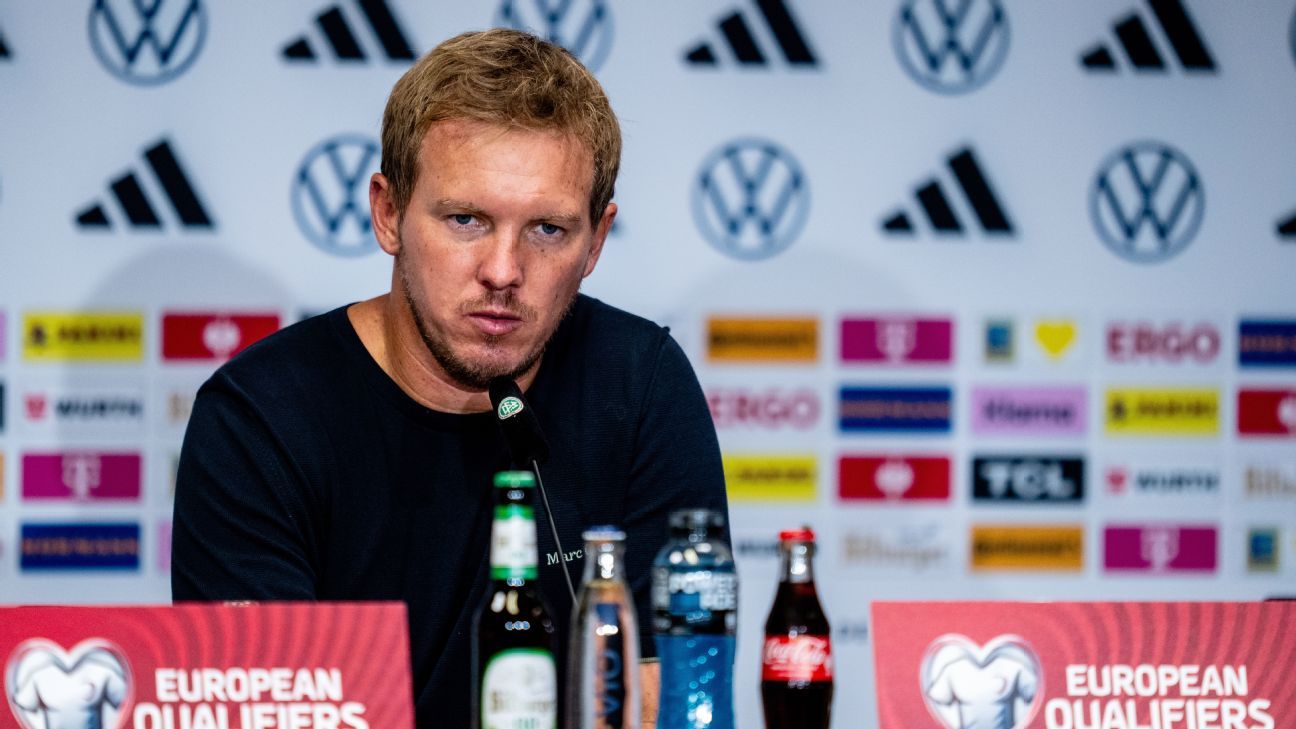
The footballing world was stirred recently when Germany’s head coach, Julian Nagelsmann, made comments regarding Northern Ireland’s style of play following Germany’s 3-1 victory in a World Cup qualifying match. His observation that Northern Ireland employs “a lot of long balls” and plays in a manner “that isn’t particularly easy on the eyes” has drawn criticism from fans and analysts alike. This remark, made in a post-match press conference, was intended to highlight a factual aspect of Northern Ireland’s approach, but it was perceived by some as disrespectful.
As the teams prepare for a rematch in Belfast, the discussions around Nagelsmann’s comments have intensified. Coach Michael O’Neill of Northern Ireland responded defensively, suggesting that teams must play to their strengths regardless of others’ opinions. O’Neill pointed out that Germany had also relied on long balls during their previous encounter, illustrating a shared element of strategy among teams competing at a high level.
Nagelsmann’s Clarification and Intent
Nagelsmann has since expressed regret if his comments were taken in a disrespectful light. In a subsequent press conference, he clarified his intentions, emphasizing respect for Northern Ireland and their effective execution of a long-ball strategy. He acknowledged that while the style may not win the aesthetic battle, it certainly achieves results. He praised Northern Ireland’s discipline and competitive edge, highlighting their efficiency in defense and ability to create scoring opportunities, especially from set pieces.
His comments reflect a broader theme in football discussions: the tension between aesthetics and effectiveness. Style points often matter to fans and analysts, but the practicalities of winning can far outweigh the visual appeal of a team’s approach. In this way, Nagelsmann’s remarks act as a catalyst for a deeper conversation about how football is analyzed and understood.
Northern Ireland’s Resilience and Adaptability
O’Neill’s rebuttal underscores an important aspect of football: adaptation. Coaches and players must remain flexible, adjusting tactics to either highlight their strengths or neutralize those of their opponents. Northern Ireland’s resilience was on display in their recent match against Slovakia, where they secured a convincing 2-0 win. This result served as a statement that the team can rise to challenges, not only adhering to a specific style but also executing effective strategies against various opponents.
Nagelsmann acknowledged this turnaround, stating that Northern Ireland’s ability to create “stress in the final third” makes them formidable adversaries. This complexity broadens the narrative beyond mere criticisms of playing style; it emphasizes the importance of analyzing the tactical depth of teams, revealing how a structured approach can yield positive results even when it is perceived to lack flair.
The Role of Individual Talent
Within the broader tactical framework, individual players often make a significant impact on a team’s performance. For instance, Florian Wirtz of Germany, who scored a stunning free-kick goal in the previous match, has been under scrutiny since his transfer to Liverpool due to high expectations. Nagelsmann is optimistic, noting that the 22-year-old is returning to his confident self. The conversation around Wirtz exemplifies how player performances can affect the overall dynamics of a team, particularly in the lead-up to a crucial rematch.
Coaches like Nagelsmann play a vital role in nurturing players’ confidence, particularly in a high-pressure environment. By discussing Wirtz’s situation, Nagelsmann reveals an understanding of the psychological aspects of football, where confidence can be as critical as tactical prowess. As they prepare for an essential game against Northern Ireland, both teams will rely on their star players to rise to the occasion.
As the fixture approaches, it’s clear that the dialogue extends beyond mere tactics and critiques. It’s an exploration of football culture, the nature of competition, and the respect between teams—all pivotal themes that characterize the spirit of the game. The upcoming match promises to showcase not only differing styles but the deep connections that define football on and off the pitch.